
TL;DR: If water is pooling in a Pasco basement from a burst pipe, a failed sump pump, or an appliance leak, call a 24/7 water damage restoration company first so extraction and drying can start before mold sets in. Call a plumber instead if water is still actively running from a fixture you can’t shut off at the valve, and call 911 or your utility if you smell gas or see wiring sitting in the water. Standing water that smells like sewage is a different, higher-risk category and should never be handled without proper PPE.
Maybe you walked downstairs in a Road 68 rental and found an inch of water creeping toward the baseboards. Maybe the sump pump in your Broadmoor-area crawlspace quit during a windstorm and the rec room carpet is soaked. Pasco basements aren’t as common as crawlspaces and slab foundations, but the ones that exist sit close to the water table near the Columbia, and a failed pump or a cracked foundation seam can turn into standing water fast. Here’s how to sort out who actually needs to be on the phone, and in what order.
Who should you call first for a flooded basement in Pasco?
Call a water damage restoration company first when the water is from an internal source and the flow has already stopped or can be stopped at a shutoff valve. Restoration Resource is a Pasco-based, IICRC Certified Firm that runs 24/7 emergency service, so a call at 2 a.m. gets the same response as one at 2 p.m.
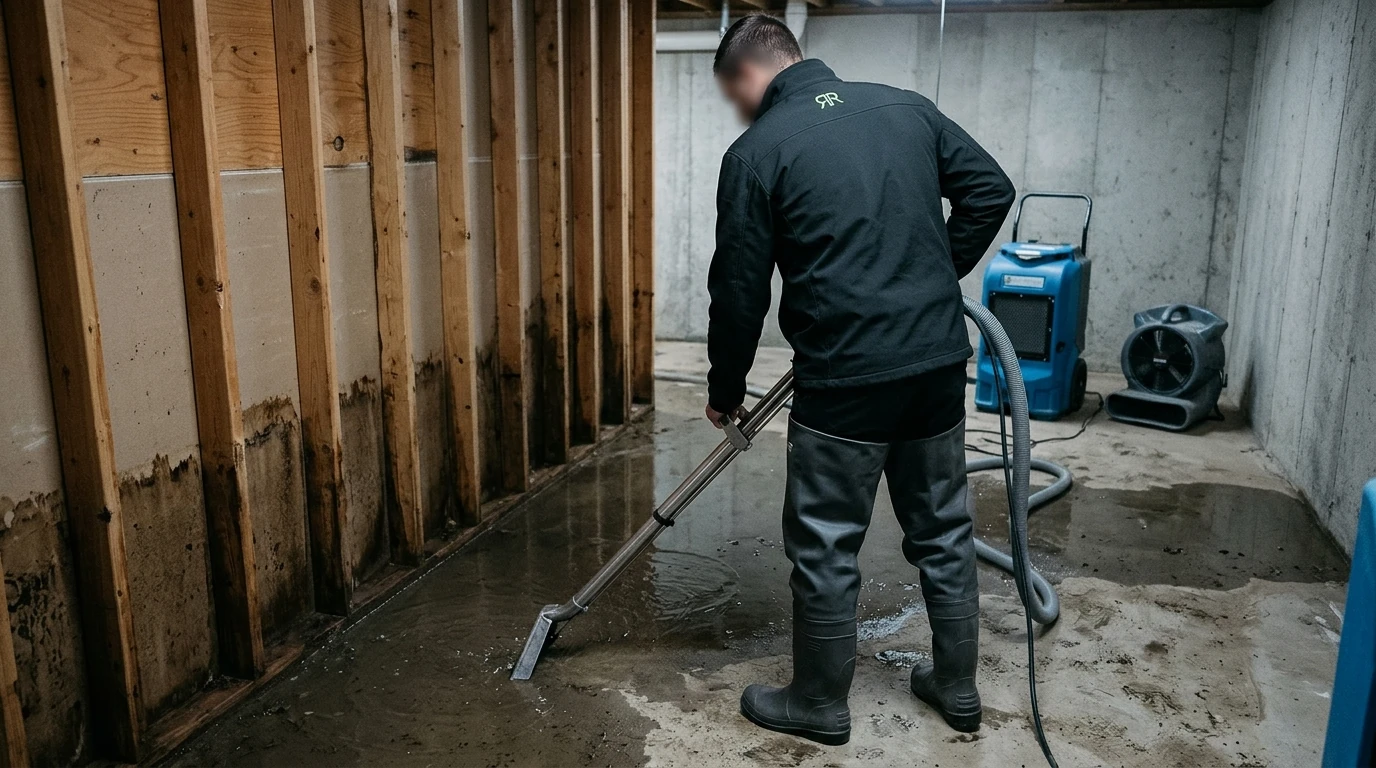
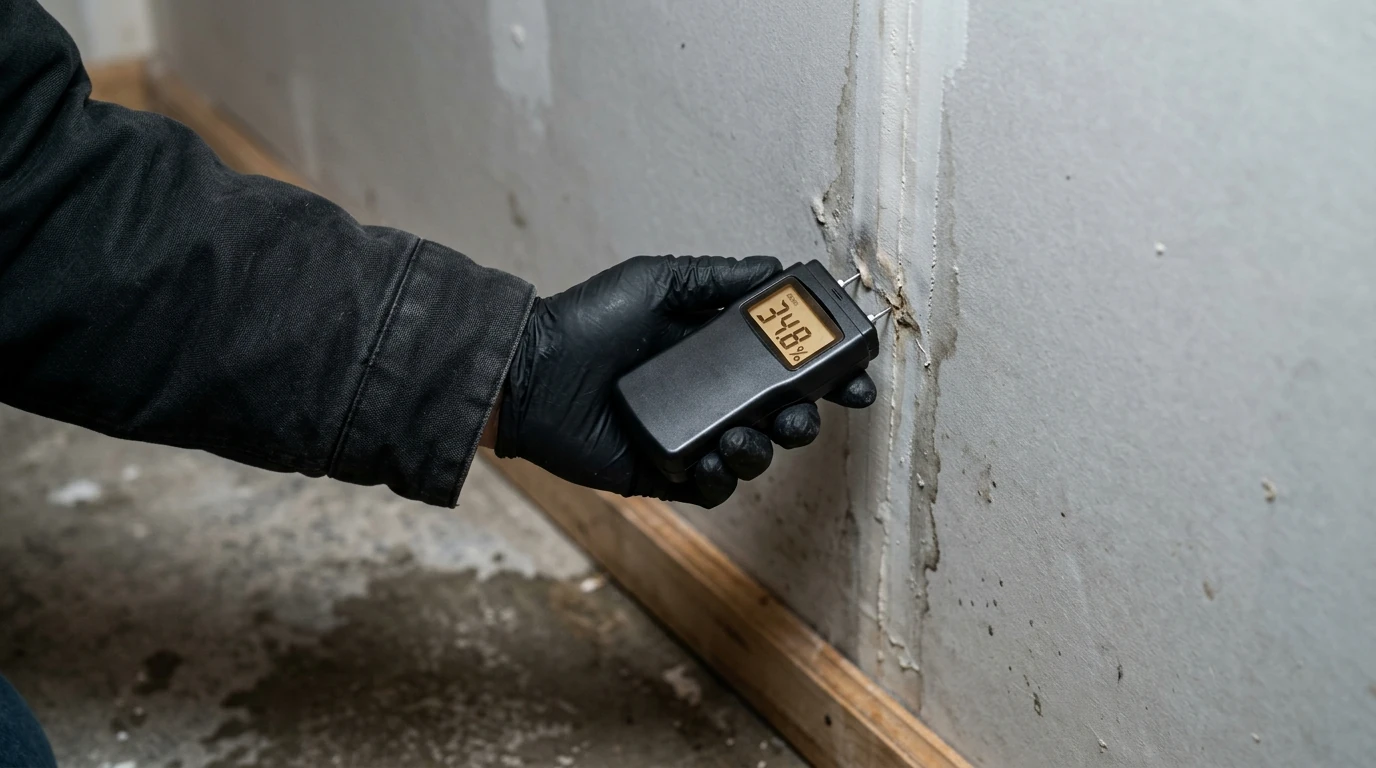
The reason restoration comes before cleanup-it-yourself is simple: untreated moisture in wall cavities and under flooring can start supporting mold growth within 24 to 48 hours, according to the EPA. A restoration crew brings truck-mounted extraction, commercial dehumidifiers, and moisture meters that find water you can’t see behind drywall or under a subfloor. A shop vac and a box fan will not dry a Pasco basement to the standard an insurance adjuster, or a future buyer’s inspector, expects.
Restoration company, plumber, or 911: who handles what
Call 911 or your utility immediately if you see sparking outlets, smell natural gas, or the water is near an electrical panel, before you touch anything else. That’s a safety call, not a restoration call.
Call a plumber first, before restoration, only when water is still actively flowing and you can’t stop it yourself, for example a supply line that sheared off at the wall or a water heater that’s actively dumping its tank. Shut off the main water valve if you can reach it safely; most Pasco homes have it near the water meter at the street side of the house or in a utility closet. Once the source is stopped, a restoration company handles everything from that point forward: extraction, drying, and documentation for your insurance claim. Many jobs need both a plumber and a restoration crew on the same day, and that’s normal, not a sign something went wrong.
Is it clean water or sewage backup? Why that changes who you call
Clean water from a burst supply line (IICRC calls this Category 1) is handled differently than water contaminated with sewage, which is Category 3 “black water” under the ANSI/IICRC S500 standard. A sewer or floor-drain backup, or a sump pump failure that lets groundwater and waste mix, is always treated as Category 3, regardless of how it started.
If the water in your basement smells like sewage, has a gray or brown tint, or came up through a floor drain, don’t walk through it and don’t let kids or pets near it. Category 3 water calls for a crew in full PPE, antimicrobial treatment, and in most cases removal of porous materials like carpet pad and baseboard rather than drying them in place. This is a sewage cleanup situation, not a standard water extraction, and it’s worth saying on the phone exactly what the water looks and smells like so the right crew and equipment show up the first time.
What happens when you call about a flooded basement
The first call is mostly triage: where the water is coming from, whether it’s still flowing, and whether it’s clean or contaminated. Have your address, the approximate size of the affected area, and whether the source has been stopped ready to go, it speeds up everything after.
On arrival, a technician checks for standing electrical hazards, extracts standing water with truck-mounted or portable pumps, and uses a moisture meter to map how far water has traveled into walls, subfloor, and framing. Air movers and dehumidifiers go in to dry the structure to the IICRC S500 standard, and the crew photographs and documents everything as they go, which becomes the backbone of your insurance claim. For basement jobs specifically, that often means pulling baseboard, checking behind drywall for wicking, and confirming the sump pump or foundation issue that caused the flooding in the first place so it doesn’t happen again.
Does homeowners insurance cover a flooded basement in Washington?
Most standard homeowners policies cover sudden, accidental water damage, like a pipe that bursts without warning, but they typically exclude gradual leaks, flood water, and sump pump or sewer backup unless you’ve added a specific endorsement for it, per the Insurance Information Institute. That last part catches a lot of Pasco homeowners off guard: a basement that floods because the sump pump failed is often NOT covered unless a water backup endorsement is already on the policy.
Document everything with photos before cleanup starts, keep any receipts, and call your agent to confirm what your specific policy covers before you assume either way. If you had a burst pipe that led to the flooding, our burst pipe emergency checklist walks through the first-hour steps that protect both the structure and the claim.
If the water is clean and the source is stopped, a water cleanup call gets extraction and drying moving the same day. If there’s any sewage involved, say so up front so a sewage cleanup crew with the right PPE and equipment is the one that shows up. Request a basement water damage assessment or call 509-528-1166 any time, day or night.