
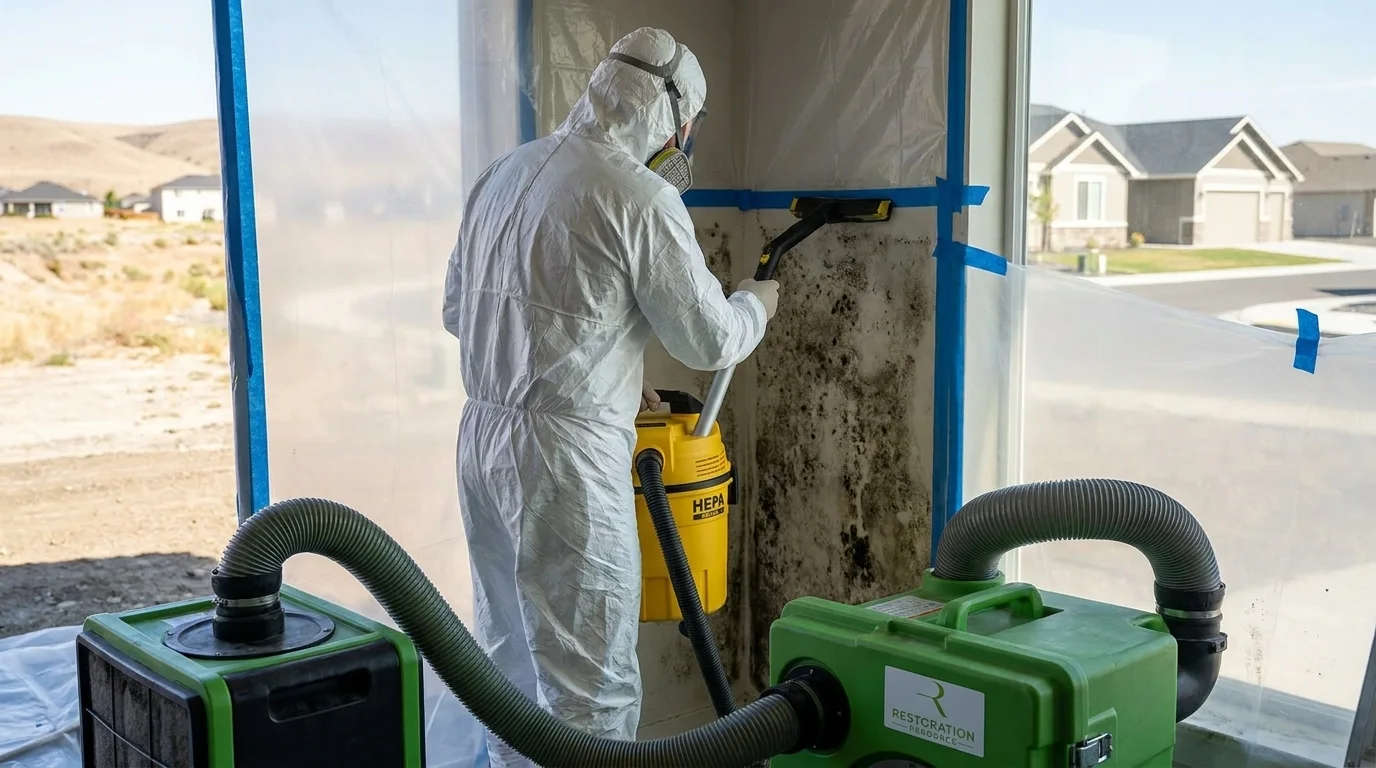
Mold Remediation in Pasco
24/7 mold remediation in Pasco and surrounding areas. IICRC-certified, insurance billing accepted. Call +15095281166.
A musty odor that gets stronger near a closet or exterior wall, a water stain on drywall that keeps coming back after you paint over it, or a recent plumbing leak that wasn’t dried out fast enough: these are the signals that mold has already moved past the surface. Mold colonizes exposed, wet building material in as little as 24 to 48 hours, and by the time it’s visible on drywall or baseboard, it has often spread further into wall cavities or subfloor than a homeowner can see or reach with a spray bottle and bleach.
What Mold Remediation actually involves
Real mold remediation is not a surface cleaning job. It starts with identifying moisture source and extent, not just the stain you can see. Affected material, drywall, insulation, carpet pad, and sometimes framing, often has to be removed rather than treated, because porous materials that have been colonized can’t be fully cleaned. The work area gets sealed off from the rest of the home with physical containment and negative air pressure so spores don’t travel into HVAC returns or adjoining rooms during demolition. Timeline depends heavily on scope: a single bathroom with a failed shower pan might run two to three days, while a crawlspace or whole-wall remediation tied to a long-term leak can take a week or more once you add drying time and clearance testing.
Our process
- Assessment and moisture mapping. We identify the source of moisture, not just the visible growth, using moisture meters and a visual inspection of framing, subfloor, and insulation.
- Containment setup. Plastic sheeting, negative air machines, and HEPA-filtered air scrubbers isolate the work area so spores and debris don’t migrate to clean parts of the home, following IICRC S520 guidance for containment class based on the size of the affected area.
- Removal of affected material. Drywall, insulation, carpet, and other porous materials that can’t be cleaned are bagged and removed. Framing and subfloor are cleaned with HEPA vacuuming and antimicrobial treatment where structurally sound.
- Drying and air scrubbing. Dehumidifiers and air movers bring the space to a normal moisture reading, while HEPA filtration continues to run and reduce airborne spore counts.
- Clearance. A final visual check and, where requested, third-party air sampling confirms the space is ready to close back up and rebuild.
What separates a good mold remediation response from a bad one
The most common shortcut is treating mold as a cosmetic problem, painting over it or wiping it down without removing the source moisture or the material it’s growing on. That approach almost always results in the growth returning within months, often worse than before because it’s now hidden behind fresh paint. Another frequent miss is skipping containment entirely, which spreads spores through the HVAC system and turns a one-room problem into a whole-house one. Insurance adjusters reviewing a mold claim typically want documentation of moisture source, photos of the affected area before demolition, and in many cases a clearance report showing the space meets acceptable air quality standards before reconstruction starts. A remediation performed without that paper trail can complicate a claim even if the physical work was done correctly.
What does Mold Remediation cost?
Cost depends on the size of the affected area, whether the source moisture issue has already been fixed, and whether the growth has reached framing or just surface materials. Every loss is different, which is why Restoration Resource provides a written scope of work before any demolition or treatment begins. Homeowners insurance typically covers mold remediation when it results from a sudden, covered event like a burst pipe, but ongoing or long-term moisture issues are often excluded, so it’s worth checking your policy language before assuming coverage.
| Scenario | Typical range |
|---|---|
| Small bathroom, surface growth only | $500 - $1,500 |
| Single room, wall cavity affected | $1,500 - $4,000 |
| Crawlspace remediation | $2,500 - $6,000 |
| Whole-wall or multi-room growth tied to a slow leak | $4,000 - $10,000 |
| Extensive growth with structural material removal | $10,000+ |
Seasonal & regional considerations
Pasco sits in a high desert climate with low annual rainfall, which keeps outdoor humidity down most of the year, but indoor moisture problems don’t follow the weather. Evaporative coolers, common in Tri-Cities homes to handle summer heat, introduce humidity directly into living spaces and attics if not properly maintained, and irrigation lines running close to foundations can create slow, chronic leaks that go unnoticed for months. Older homes in the area with crawlspace foundations are particularly prone to trapped moisture when vapor barriers are missing or damaged, which is one of the more common sources of hidden mold growth we’re asked to investigate.
Service area
Restoration Resource responds to mold remediation calls throughout Pasco and the surrounding Tri-Cities area, including Kennewick and Richland, along with nearby communities across Franklin and Benton counties.
If you’re seeing recurring discoloration, smelling a musty odor that won’t go away, or dealing with the aftermath of a leak that sat too long before it was caught, request an air quality test and get a written scope before the growth spreads any further.
Services We Handle
- Water Damage Mold Removal
Frequently Asked Questions
Does homeowners insurance cover mold remediation?
What level of mold remediation requires containment under IICRC S520?
Can I just clean black mold myself with bleach?
How do I know if mold remediation actually worked?
How long does mold remediation take from start to finish?
Looking for the best mold remediation company in Pasco?
Restoration Resource provides licensed and insured mold remediation in Pasco, WA and the surrounding area, and has served local property owners since 2022. Customers rate us 5.0 out of 5 stars across 38 Google reviews. We answer calls 24/7 — call +15095281166 for immediate help.
Need Mold Remediation now?
We respond 24/7 across Pasco and surrounding WA cities.
Related Coverage
- Our Restoration Services
- 24/7 Emergency Water Damage Restoration in Pasco
- Mold Inspection and Testing in Pasco
- Contact Restoration Resource
- Mold Remediation in Highland
- Mold Remediation in Kennewick
- Mold Remediation in Mesa
- Mold Remediation in Plymouth
- How To Choose a Restoration Company in Pasco (Without Getting Burned)
- How To Test for Mold in Your Home (DIY Kits vs a Pro Inspection)
- 7 Signs You Have Hidden Mold (and What To Do Next)