
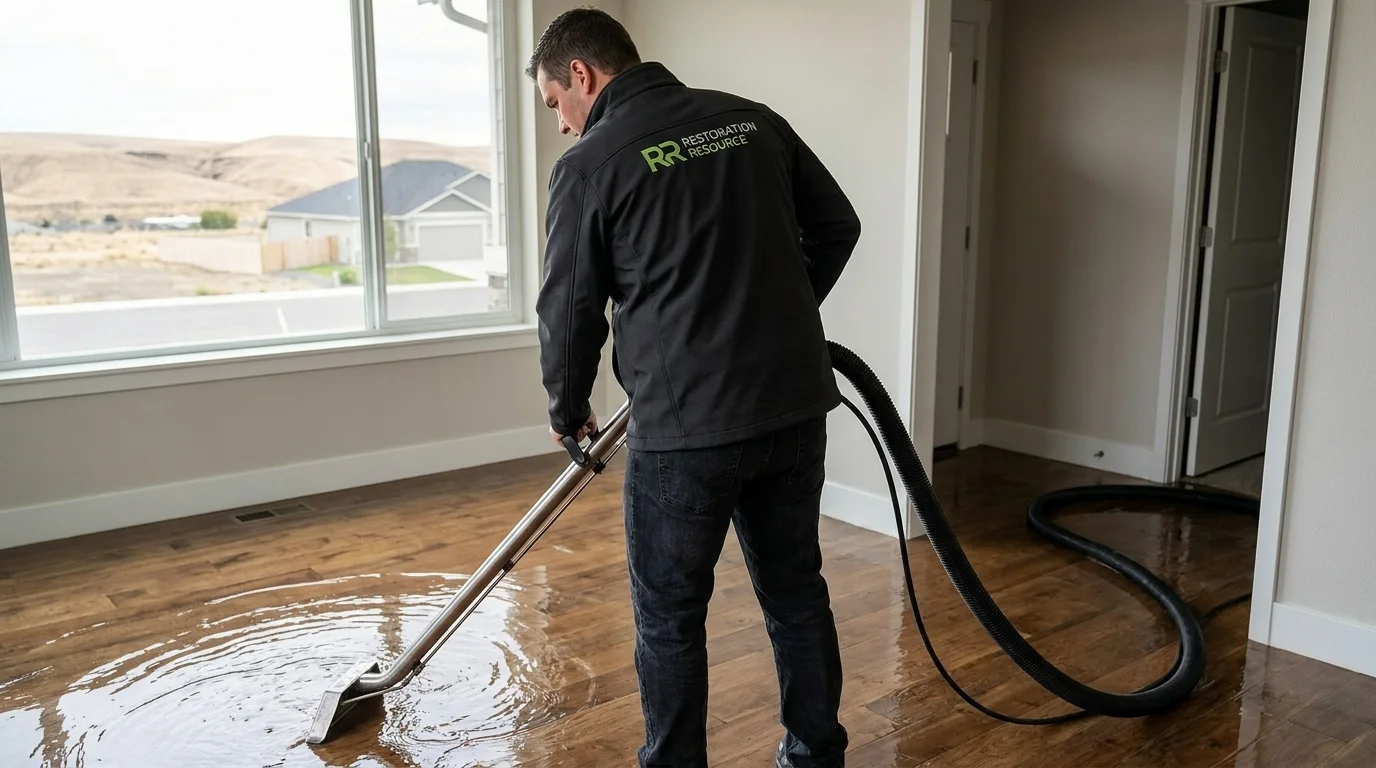
24/7 Emergency Flood Damage Restoration in Pasco
24/7 emergency flood damage restoration in Pasco and surrounding areas. IICRC-certified, insurance billing accepted. Call +15095281166.
Flooding in your home right now? Call now for emergency service. Standing water that enters from outside the structure, whether from a swollen irrigation canal, river overflow, or a storm drain backing up, behaves differently than a burst supply line. It carries silt, bacteria, and sometimes chemical runoff into your walls and flooring within minutes, and the clock on mold colonization starts the moment water stops moving.
What flood damage restoration actually involves
Flood damage restoration deals with water that originated outside the home’s plumbing system, which almost always means it needs to be treated as Category 2 (gray) or Category 3 (black) water rather than the clean-water Category 1 losses from a supply line failure. That distinction drives everything downstream: what materials can be dried in place versus removed, what PPE a crew wears on site, and what antimicrobial treatment is required before any rebuild work starts. A typical flood response involves truck-mounted or portable extraction equipment to pull standing water first, moisture mapping with penetrating and non-penetrating meters to find where water has traveled inside wall cavities and under flooring, and a drying plan that’s monitored daily rather than assumed. Depending on how much water intruded and how long it sat before the crew arrived, the drying phase can run several days to over a week.
Our process
- Safety check and water categorization. Before extraction starts, the crew confirms electrical safety and classifies the water source, since contaminated flood water changes every step that follows.
- Extraction of standing water. Pumps and extractors remove bulk water from floors, crawlspaces, and basements, prioritizing areas where water depth or sitting time is highest.
- Removal of compromised porous materials. Carpet padding, baseboards, and drywall that absorbed contaminated water typically can’t be salvaged and are removed to stop the material from becoming a longer-term mold or odor source.
- Antimicrobial treatment. Affected framing, subfloor, and remaining structure are treated to address bacterial and mold risk before drying equipment goes in.
- Monitored structural drying. Air movers and dehumidifiers are placed and tracked against daily moisture readings until the structure reads dry per the IICRC S500 standard, not just by feel or guesswork.
What separates a good flood damage response from a bad one
The most common mistake is treating flood water like a clean-water loss because the water looks clear on the surface. Gray and black water carry contamination that isn’t visible, and skipping the categorization step means porous materials get dried and reinstalled when they should have been removed, which shows up later as odor or microbial growth behind a wall that was supposedly dried. A second common miss is drying to a surface-dry condition and pulling equipment early; subfloor and framing can still hold moisture well after the top layer feels dry. Insurance adjusters reviewing a flood claim typically want to see documented moisture readings over time, photos of material removal decisions, and a clear record of the water’s classification, not just a final invoice. A written scope that ties each line item back to a documented condition holds up far better during claim review than a generic cleanup description.
What does flood damage restoration cost?
Costs vary widely based on how much water intruded, how contaminated it was, and how long it sat before extraction started. Every loss is different, and Restoration Resource provides a written scope of work before any restoration begins so there are no surprises once the drying equipment is already running. Homeowners insurance typically covers flood damage restoration when the water source is internal (like a failed appliance or pipe), but water that enters from outside the home, such as river or canal overflow, is often only covered under a separate flood insurance policy, so it’s worth checking your policy type before assuming coverage.
| Scenario | Typical range |
|---|---|
| Single room, clean-water intrusion | $1,200 - $3,500 |
| Crawlspace or basement flood, partial saturation | $2,500 - $6,000 |
| Multiple rooms, contaminated groundwater | $3,500 - $8,000 |
| Flood with drywall and flooring removal required | $6,000 - $12,000 |
| Whole-floor flood, Category 3 water throughout | $8,000 - $15,000+ |
Seasonal & regional considerations
Pasco sits near the confluence of the Columbia and Snake Rivers, and the surrounding area relies heavily on irrigation canals that run through and near residential neighborhoods. Spring snowmelt runoff and occasional heavy rain on hard, dry summer soil both increase the risk of fast-moving water finding its way into crawlspaces and basements with little warning. The region’s generally low humidity is an advantage once drying equipment is running, but it doesn’t change how quickly contaminated flood water needs to be addressed before it reaches framing and subfloor.
Service area
Restoration Resource responds to flood damage throughout Pasco and the surrounding Tri-Cities area, including Kennewick and Richland. Crews are licensed (#RESTORL764CE) and available 24/7 for flood emergencies across the region.
If water is actively standing in your home, don’t wait for it to recede on its own. Call Restoration Resource at (509) 528-1166 to schedule your flood damage assessment and get extraction underway before contamination and moisture spread further into the structure.
Frequently Asked Questions
Does homeowners insurance cover flood damage restoration?
How is flood water categorized, and why does it matter for the cleanup?
How long does structural drying take after a flood?
Will my drywall and flooring need to be removed after a flood?
What should I do while I'm waiting for help to arrive after a flood?
Looking for the best flood damage restoration company in Pasco?
Restoration Resource provides licensed and insured flood damage restoration in Pasco, WA and the surrounding area, and has served local property owners since 2022. Customers rate us 5.0 out of 5 stars across 38 Google reviews. We answer calls 24/7 — call +15095281166 for immediate help.
Need Flood Damage Restoration now?
We respond 24/7 across Pasco and surrounding WA cities.