
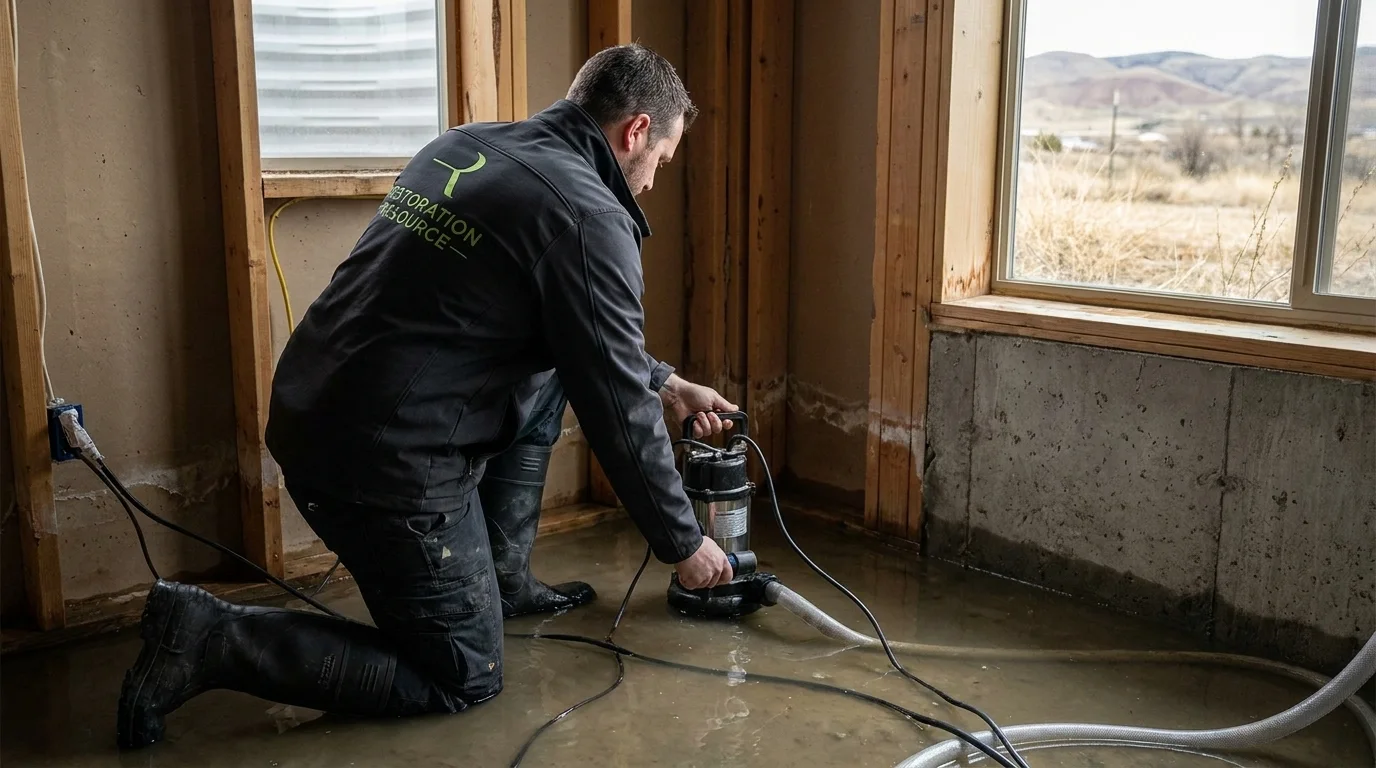
24/7 Emergency Basement Flooding Cleanup in Pasco
24/7 emergency basement flooding cleanup in Pasco and surrounding areas. IICRC-certified, insurance billing accepted. Call +15095281166.
Basement flooding emergency in Pasco? Call now, we answer 24/7. Standing water in a below-grade space does more damage per hour than almost any other type of loss because it has nowhere to drain and nothing stopping it from wicking up into framing, insulation, and drywall while you’re still figuring out where it came from.
Whether the source is a failed sump pump, a cracked foundation wall letting in groundwater, a sewer backup during a heavy rain event, or a water heater that let go overnight, the cleanup approach is different from a typical upstairs water loss. Basements trap moisture, limit airflow, and often hide the worst damage behind finished walls or under carpet pad that’s already saturated through to the slab.
What basement flooding cleanup actually involves
A basement flood response starts with identifying the water category, because a sump failure with clean water is handled very differently than a sewage backup, which is treated as Category 3 contaminated water requiring PPE, antimicrobial treatment, and disposal of porous materials that can’t be sanitized. Equipment typically includes submersible pumps for standing water over an inch or two, truck-mounted or portable extraction units for saturated carpet and pad, and a combination of low-grain-refrigerant dehumidifiers with air movers positioned to pull moisture out of wall cavities and subfloor, not just off visible surfaces.
Drying timelines in a basement run longer than an above-grade room because concrete and masonry hold moisture and release it slowly. Our techs carry moisture meters into every drying job and use them on drywall, baseboards, and framing, not just the carpet, since a basement can look dry on the surface while the bottom two feet of drywall are still wicking water.
Our process
- Source and category identification. Before any equipment goes in, we confirm what’s causing the flooding (sump failure, foundation seepage, sewer backup, appliance failure) and classify the water category, which determines whether materials can be dried in place or need to come out.
- Water extraction. Standing water is pumped and extracted first, working from the lowest point in the slab outward, including water trapped under carpet pad and in wall cavities where it can pool behind baseboard.
- Containment for Category 2 or 3 water. If the water is from a sewer backup or has been standing long enough to carry contaminants, we set up containment and treat affected porous materials with EPA-registered antimicrobials before drying begins.
- Structural drying and moisture monitoring. Dehumidifiers and air movers are placed per a drying plan, and we log moisture readings in framing, drywall, and subfloor daily until materials hit dry standard, following IICRC S500 guidelines rather than guessing by feel.
- Verification and reassembly. Once moisture content is confirmed dry, we document final readings for the insurance file and coordinate what needs to be replaced (drywall, baseboard, flooring) versus what dried successfully in place.
What separates a good basement flooding response from a bad one
The most common mistake is drying the carpet and calling it done while the drywall behind the baseboard is still wet, which shows up as mold or a musty smell two to three weeks later. A thorough response pulls baseboard, checks behind it, and drills small weep holes in drywall when needed to confirm the wall cavity is actually drying, not just the surface.
Another gap is misclassifying the water. Groundwater coming through a foundation crack during a storm is often treated as clean water when it’s actually picked up soil contaminants and should be handled as Category 2. Adjusters reviewing a basement flood claim typically want to see daily psychrometric readings, photos of the source, and documentation of what was removed versus dried in place, so a sloppy paper trail can slow down claim approval even when the physical work was done correctly.
What does basement flooding cleanup cost?
Costs vary with the water source, how long the basement sat flooded, whether the space is finished or unfinished, and how much needs to be replaced versus dried. Every loss is different, which is why Restoration Resource provides a written scope of work before cleanup begins so there are no surprises. Most homeowners insurance policies cover sudden water damage from a burst pipe or appliance failure, but groundwater flooding and sewer backup often require separate endorsements, so it’s worth checking your policy before a storm, not after.
| Scenario | Typical range |
|---|---|
| Sump pump failure, unfinished basement, clean water | $1,000 - $2,800 |
| Foundation seepage after heavy rain, partial flooding | $1,800 - $4,500 |
| Finished basement, drywall and carpet replacement | $3,500 - $8,500 |
| Sewage backup, Category 3 water, containment required | $4,000 - $10,000+ |
| Water heater failure, standing water under 24 hours | $1,200 - $3,000 |
Seasonal & regional considerations
Pasco sits in the Columbia Basin, where spring snowmelt runoff and irrigation season can push groundwater levels up enough to stress older foundation walls, especially in homes built before modern below-grade waterproofing became standard. Winter freeze-thaw cycles crack foundation concrete over time, creating new entry points for water that often aren’t discovered until the next heavy rain or irrigation cycle sends water looking for the path of least resistance. Homes with sump pumps should have them tested before the wet season, since a pump that hasn’t run in months is the most common point of failure we see.
Service area
We respond to basement flooding calls throughout Pasco and the surrounding Tri-Cities area, including Kennewick and Richland, where housing stock ranges from older slab and crawlspace construction to newer homes with finished basements that carry more at-risk square footage per flood event.
If water is actively coming into your basement right now, don’t wait to see if it stops on its own. Call Restoration Resource to schedule basement water removal and get drying equipment on-site before the damage spreads past the floor.
Frequently Asked Questions
Does homeowners insurance cover basement flooding cleanup?
How long does it take to dry out a flooded basement?
What's the difference between a sump pump failure and a sewer backup when it comes to cleanup?
Can mold start growing after a basement flood before cleanup begins?
Do you need to remove my finished basement walls after a flood?
What should I do while I'm waiting for a basement flooding crew to arrive?
Looking for the best basement flooding cleanup company in Pasco?
Restoration Resource provides licensed and insured basement flooding cleanup in Pasco, WA and the surrounding area, and has served local property owners since 2022. Customers rate us 5.0 out of 5 stars across 38 Google reviews. We answer calls 24/7 — call +15095281166 for immediate help.
Need Basement Flooding Cleanup now?
We respond 24/7 across Pasco and surrounding WA cities.