
24/7 Emergency Water Damage Restoration in Pasco
24/7 emergency water damage restoration in Pasco and surrounding areas. IICRC-certified, insurance billing accepted. Call +15095281166.
Water damage emergency in Pasco? Call now, we answer 24/7.
A slow leak behind a water heater or a failed supply line under a kitchen sink rarely announces itself with a flood. More often it’s a soft spot in the subfloor, a faint musty smell from the hall closet, or a baseboard that’s started to bow. By the time those signs show up, water has usually been sitting in wall cavities or under flooring for hours, sometimes days, and the clock on mold colonization (typically 24 to 48 hours in warm, moist conditions) is already running. Restoration Resource handles the extraction, drying, and moisture tracking that stops that clock before it becomes a bigger problem.
What water damage restoration actually involves
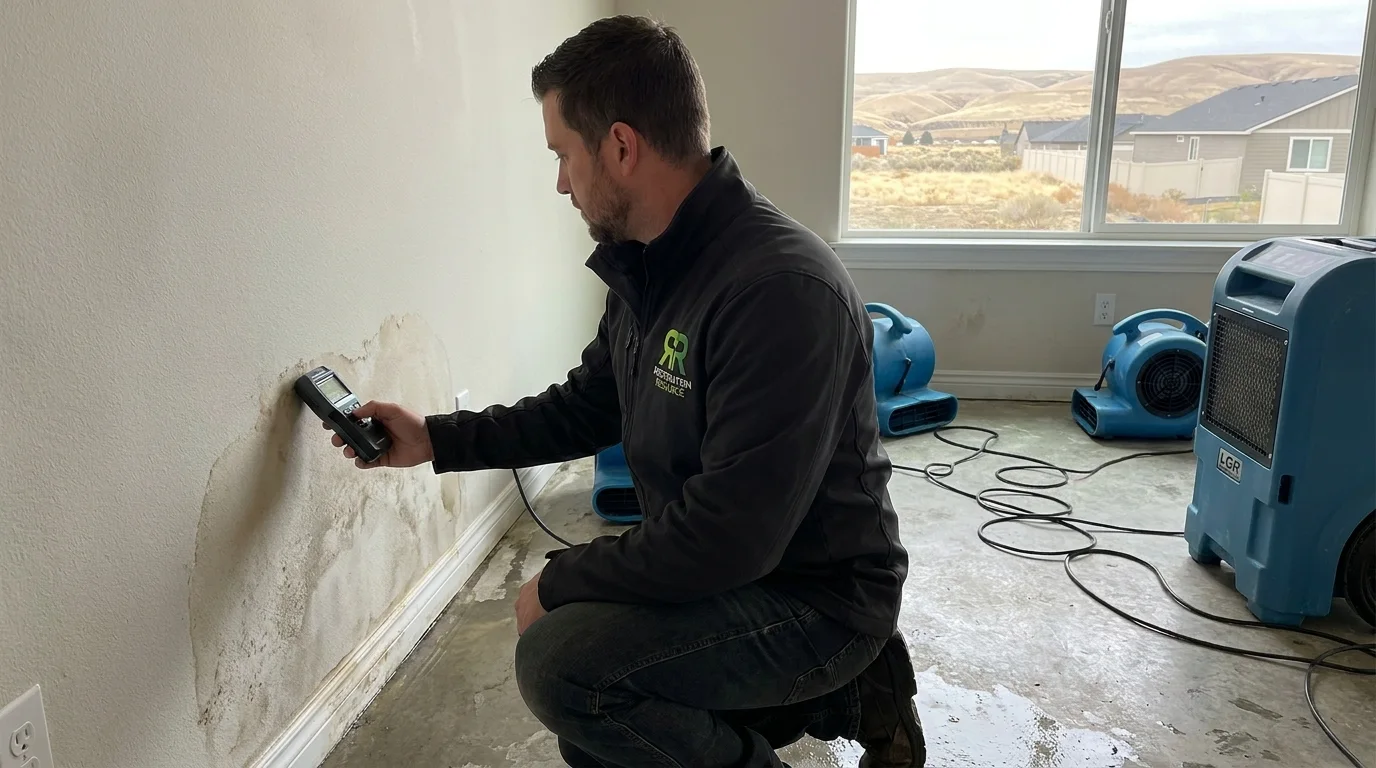
Water damage restoration is the process of removing standing and absorbed water, then drying the structure back to a verified dry standard, not just a dry-to-the-touch guess. That means pulling water out with truck-mount or portable extraction units, setting air movers and dehumidifiers in a calculated ratio to the affected space, and tracking moisture content in drywall, subfloor, and framing with a penetrating meter over several days. For Category 2 (gray water, from appliances or sump backups) or Category 3 (black water, from sewage or flooding) losses, containment barriers and PPE come into play before any drying equipment goes in. A single-room leak might dry in two to three days. A multi-room loss with saturated subfloor or plaster walls can take a week or more, with daily moisture readings logged and shared with the homeowner and the insurance adjuster.
Our process
- Moisture assessment and source identification. Before anything is moved, we find where the water came from and how far it traveled, using moisture meters and sometimes thermal imaging to map what’s wet behind walls and under flooring that looks fine on the surface.
- Extraction. Standing water comes out first with pumps or extraction units, because every hour it sits is an hour it wicks further into porous materials.
- Containment for Category 2/3 water. If the water source is gray or black water, we isolate the affected area and follow IICRC S500 protocols for contaminated water before drying begins.
- Structural drying. Air movers, dehumidifiers, and sometimes injection drying systems for wall cavities go in based on the size and shape of the affected space, not a one-size-fits-all setup.
- Moisture monitoring and documentation. We check and record moisture levels daily until materials reach a dry standard, which is the documentation most carriers want to see before closing a claim.
What separates a good water damage response from a bad one
The most common mistake isn’t missing the water you can see, it’s missing the water you can’t. Drywall can read dry at the surface while the insulation and framing behind it stay saturated for a week, and carpet that looks fine can be hiding a wet pad and a damp subfloor underneath. A rushed job pulls out visible water, runs a couple of fans, and calls it done. A thorough one checks relative humidity, documents moisture readings in multiple spots per room, and keeps equipment running until the numbers, not the calendar, say the job is finished. Adjusters tend to look for exactly that: dated moisture logs, photos of affected materials before removal, and a clear record of what equipment ran and for how long. Skipping that paperwork is one of the more common reasons claims get delayed or underpaid.
What does water damage restoration cost?
Costs vary widely based on the category of water, how far it traveled, and how many materials need to be removed versus dried in place. Most homeowners pay within a range depending on scope, and every loss gets a written estimate from Restoration Resource before work starts so there are no surprises. Homeowners insurance typically covers sudden and accidental water damage, such as a burst pipe or appliance failure, but usually excludes gradual leaks or flooding without separate flood coverage.
| Scenario | Typical range |
|---|---|
| Single room, clean water, minimal materials removed | $1,200 - $3,500 |
| Multi-room clean water with carpet and pad replacement | $3,500 - $7,500 |
| Category 2 (gray water) with wall/baseboard removal | $4,500 - $9,000 |
| Category 3 (sewage or flood) with full containment | $7,000 - $15,000+ |
| Hardwood floor affected, drying or replacement | $2,500 - $6,000 |
Seasonal & regional considerations
The Tri-Cities sees hard freezes most winters, and frozen or burst pipes are one of the more common emergency calls between December and February, especially in older Pasco homes with pipes run through unheated crawlspaces or exterior walls. Summers bring the opposite risk: irrigation line breaks and sprinkler system failures are common across Pasco’s newer residential developments, where landscaping lines run close to foundations. Either way, the longer standing water sits against a foundation or under flooring, the more likely secondary damage like swelling or microbial growth becomes.
Service area
Restoration Resource responds to water damage calls throughout Pasco and the surrounding Tri-Cities area, including Kennewick, Richland, and West Richland. Response specifics for each city are covered on their individual pages, but the extraction and drying process described here is the same approach used across the service area.
If water is actively spreading through your home or business, schedule your moisture assessment now and we’ll start extraction before the damage reaches materials that are harder and more expensive to dry.
Services We Handle
- Water Damage Cleanup Repair
- Water Mitigation
- Wet Carpet Drying
Frequently Asked Questions
Does homeowners insurance cover water damage restoration?
How long does structural drying typically take?
What's the difference between Category 1, 2, and 3 water damage?
Can wet drywall and insulation be dried, or do they need to be removed?
What should I do while waiting for a water damage crew to arrive?
Looking for the best water damage restoration company in Pasco?
Restoration Resource provides licensed and insured water damage restoration in Pasco, WA and the surrounding area, and has served local property owners since 2022. Customers rate us 5.0 out of 5 stars across 38 Google reviews. We answer calls 24/7 — call +15095281166 for immediate help.
Need Water Damage Restoration now?
We respond 24/7 across Pasco and surrounding WA cities.
Related Coverage
- Our Restoration Services
- Mold Remediation in Pasco
- Contact Restoration Resource
- 24/7 Emergency Water Damage Restoration in Basin City
- 24/7 Emergency Water Damage Restoration in Benton City
- 24/7 Emergency Water Damage Restoration in Connell
- 24/7 Emergency Water Damage Restoration in Finley
- 24/7 Emergency Water Damage Restoration in Highland
- 24/7 Emergency Water Damage Restoration in Kahlotus
- 24/7 Emergency Water Damage Restoration in Kennewick
- 24/7 Emergency Water Damage Restoration in Mesa
- 24/7 Emergency Water Damage Restoration in Paterson
- 24/7 Emergency Water Damage Restoration in Plymouth
- 24/7 Emergency Water Damage Restoration in Prosser
- 24/7 Emergency Water Damage Restoration in Richland
- 24/7 Emergency Water Removal & Cleanup in Pasco
- 24/7 Emergency Water Cleanup in Pasco
- Burst Pipe Emergency Checklist: Step-by-Step Response
- What To Do in the First 24 Hours After Water Damage
- How To Choose a Restoration Company in Pasco (Without Getting Burned)