
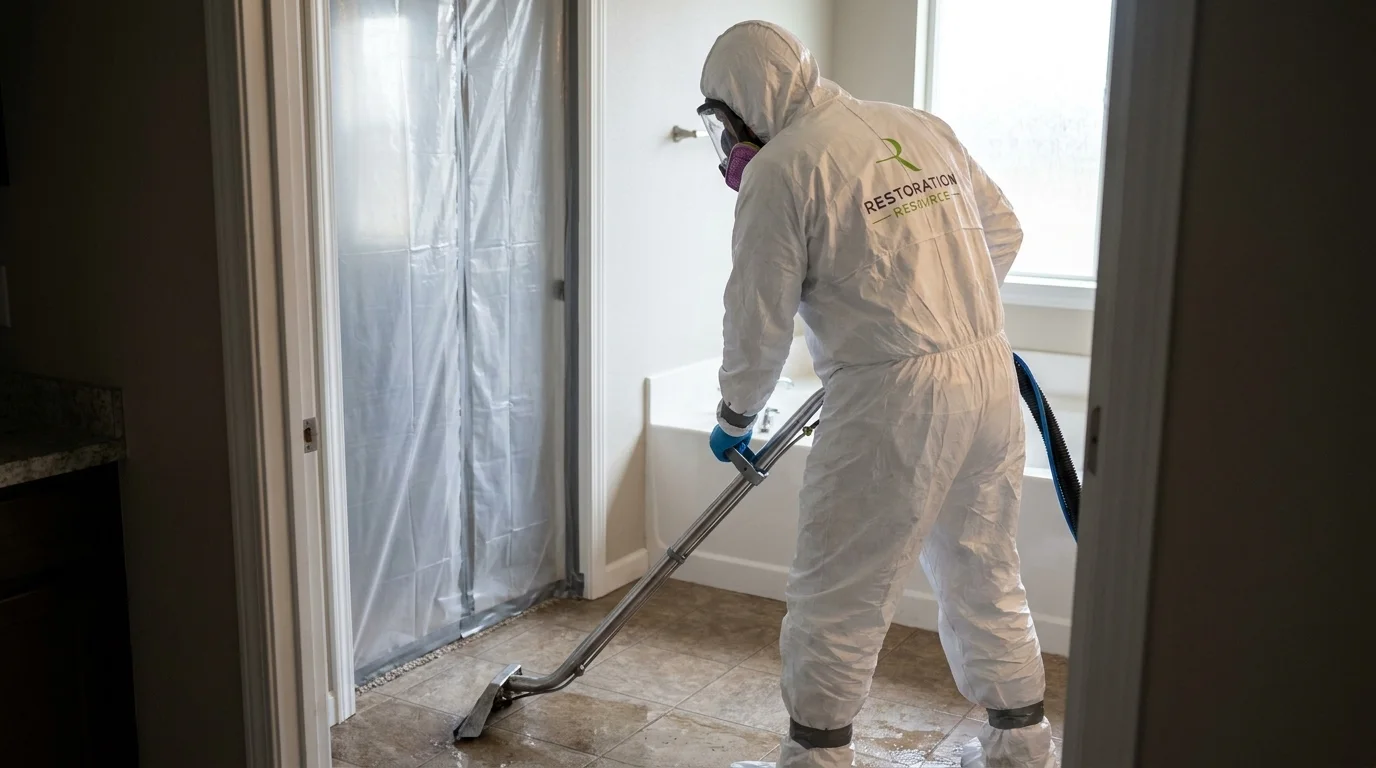
24/7 Emergency Sewage Cleanup and Sanitization in Pasco
24/7 emergency sewage cleanup and sanitization in Pasco and surrounding areas. IICRC-certified, insurance billing accepted. Call +15095281166.
Raw sewage backing up through a drain, toilet, or floor drain is a health hazard, not a cleaning project. Restoration Resource answers 24/7 for sewage cleanup and sanitization across Pasco, because category 3 water carrying bacteria, viruses, and parasites starts contaminating porous materials within hours, and every hour it sits is an hour closer to a full tear-out instead of a save.
What Sewage Cleanup and Sanitization actually involves
Sewage backup cleanup is classified as category 3 water damage, the most contaminated tier under IICRC guidelines, which means the standard rules for extraction and drying don’t apply the same way. Carpet, carpet pad, drywall below the flood line, and most insulation that contacts raw sewage are generally removed rather than dried, because porous materials can’t be reliably sanitized once contaminated. Non-porous surfaces, concrete, tile, sealed hardwood, and framing lumber can often be cleaned, disinfected, and dried in place. Equipment includes truck-mounted extraction for standing effluent, antimicrobial and EPA-registered disinfectant application, air scrubbers to manage airborne pathogens, and structural drying equipment once the space is clean. A contained sewer line backup in a single bathroom might resolve in two to three days; a septic overflow that’s spread across a finished basement runs longer once demolition and disposal are factored in.
Our process
- Contamination assessment and containment. We identify the source (sewer line backup, septic overflow, sump failure) and set up containment to stop cross-contamination into unaffected rooms before any equipment runs.
- Raw sewage removal and extraction. Standing waste and contaminated water are extracted and removed from the structure using truck-mounted equipment, with saturated porous materials, carpet, pad, baseboards, affected drywall, pulled as part of the same pass.
- Cleaning and antimicrobial application. Remaining surfaces are washed, scrubbed, and treated with EPA-registered disinfectants formulated for sewage-contaminated environments, following IICRC S500 category 3 protocols.
- Drying and air quality control. Once the space is sanitized, drying equipment and air scrubbing bring moisture and airborne particulate back to normal range, with daily monitoring until readings clear.
- Documentation for your claim. Photos, moisture logs, and disposal records are compiled so your adjuster has the paperwork a category 3 loss requires.
What separates a good sewage cleanup response from a bad one
The most common mistake is treating a sewage backup like a regular water loss, drying carpet and pad that should have been discarded, or skipping antimicrobial treatment on subfloor because it’s “going to be covered up anyway.” Adjusters reviewing category 3 claims look for documented disposal of contaminated porous materials, not just drying logs, and for photos showing the contamination line before demolition started. Another gap is incomplete source correction: cleaning up a septic overflow without confirming the line or tank issue that caused it just sets up a repeat call. A thorough response also tests for hidden migration, sewage traveling under flooring or into wall cavities beyond where it’s visible on the surface, since missing that is how odor and bacteria problems resurface weeks later.
What does Sewage Cleanup and Sanitization cost?
Costs vary with the volume of sewage, how far it traveled, and how much porous material has to be removed versus cleaned in place. These figures are typical industry ranges, not a quote: every loss gets a written scope from Restoration Resource before work begins, and most homeowners insurance policies cover sudden sewer backups and septic overflows (check your specific policy language, since some carriers require a separate sewer backup rider).
| Scenario | Typical range |
|---|---|
| Single bathroom, contained backup | $1,500 - $3,500 |
| Sewer line backup affecting multiple rooms | $3,500 - $8,000 |
| Basement septic overflow with carpet/drywall removal | $6,000 - $15,000 |
| Whole-structure contamination with extensive demolition | $15,000 - $30,000+ |
| Antimicrobial/sanitization treatment only (post-extraction) | $500 - $1,500 |
Seasonal & regional considerations
Pasco’s older neighborhoods still run on clay and cast iron sewer laterals that are prone to root intrusion and collapse, which tends to show up as slow drains before a full backup. Heavy spring runoff and the occasional ice-affected main line in winter can also push municipal sewer systems toward capacity, backing flow into lower-elevation homes. Properties on septic systems west of the city see overflow issues most often during wet stretches when the leach field can’t absorb at the usual rate.
Service area
Restoration Resource responds to sewage backups throughout Pasco and the surrounding Tri-Cities area, including Kennewick, Richland, and nearby communities, for both sewer line and septic-related losses.
If sewage is backing up into your home right now, stop using water in the house, keep people and pets out of the affected area, and call Restoration Resource. We’re licensed (#RESTORL764CE) and available 24/7 to start containment and raw sewage removal before contamination spreads further.
Services We Handle
- Basement Sewage Cleanup
- Category 3 Water Cleanup
- Water Damage Sewage Cleanup
Frequently Asked Questions
Does homeowners insurance cover sewage cleanup and sanitization?
Why can't you just dry out carpet that's had sewage on it?
How do you know if sewage has spread under the flooring or into the walls?
What's the difference between a sewer line backup and a septic overflow for cleanup purposes?
How long does antimicrobial treatment take to work after extraction?
Looking for the best sewage cleanup and sanitization company in Pasco?
Restoration Resource provides licensed and insured sewage cleanup and sanitization in Pasco, WA and the surrounding area, and has served local property owners since 2022. Customers rate us 5.0 out of 5 stars across 38 Google reviews. We answer calls 24/7 — call +15095281166 for immediate help.
Need Sewage Cleanup and Sanitization now?
We respond 24/7 across Pasco and surrounding WA cities.