
24/7 Emergency Water Removal & Cleanup in Pasco
24/7 emergency water removal & cleanup in Pasco and surrounding areas. IICRC-certified, insurance billing accepted. Call +15095281166.
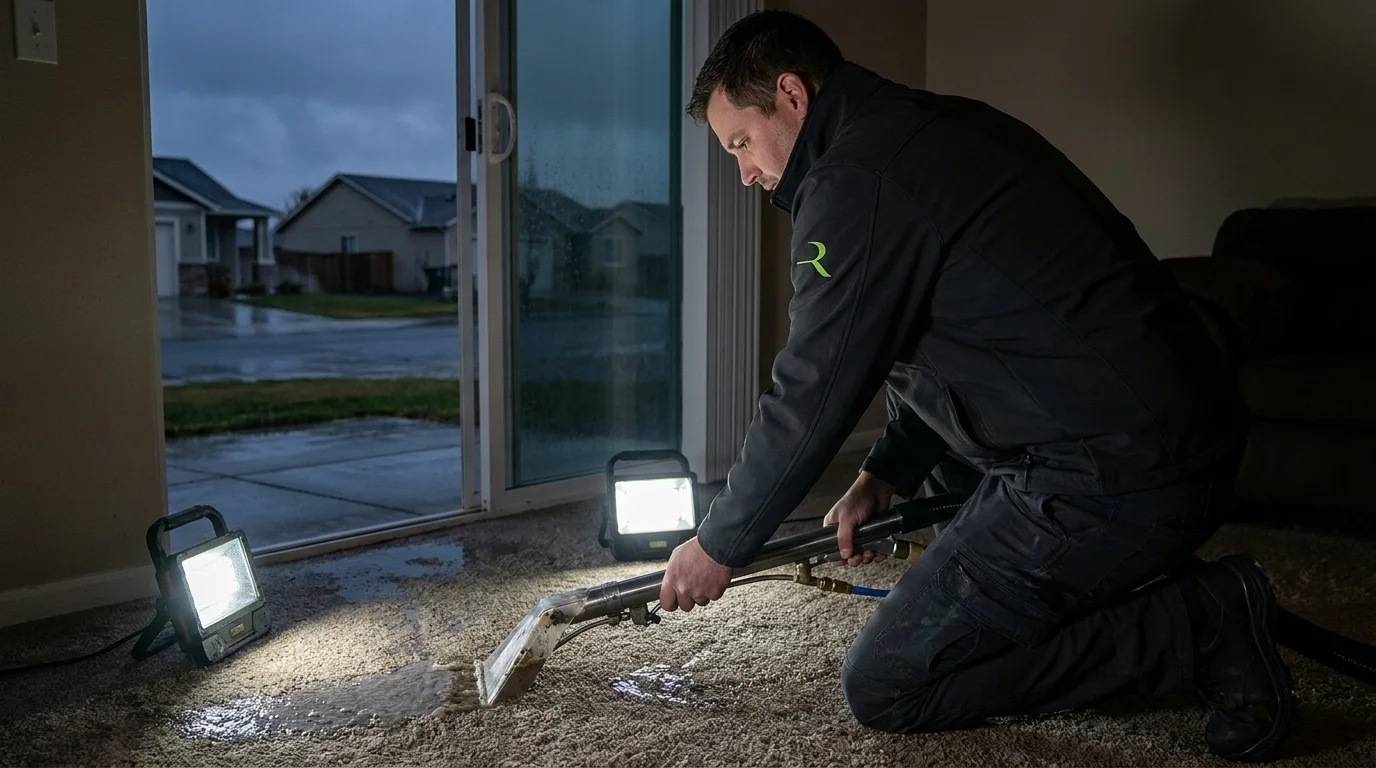
Water damage emergency in Pasco? Call now, we answer 24/7. A supply line failure, a washing machine hose that lets go overnight, or floodwater backing up through a crawlspace doesn’t wait for business hours, and neither does the damage. Water moves into subfloor, baseboards, and wall cavities within the first few hours, and the longer it sits, the more materials have to be removed instead of dried. Emergency water removal and cleanup is the fast, equipment-heavy response that pulls standing water out before it spreads and sets up the drying work that follows.
What emergency water removal & cleanup actually involves
This is the physical extraction phase, not the slower drying-and-monitoring phase that comes after. Crews bring truck-mounted or portable extraction units for open areas and submersible pumps for anything deeper than a couple of inches. Carpet, pad, and standing water on hard flooring get pulled first, followed by moisture checks with penetrating meters and thermal imaging to find water that’s already migrated into walls, cabinets, or subfloor where it isn’t visible yet. How fast this needs to happen depends on the water category: clean supply-line water (Category 1) gives you more working time than water that’s touched soil or backed up from a drain (Category 2 or 3), which needs to come out immediately and often requires removal of porous materials that can’t be sanitized.
Our process
- Extraction. Standing water comes out first using pumps and extraction units sized to the volume and depth of water on site.
- Moisture mapping. Meters and thermal imaging identify where water has traveled into walls, subfloor, and cabinetry, not just where it’s visible on the surface.
- Drying setup. Air movers and dehumidifiers go in based on the moisture map, calculated for the square footage and material types affected, not a flat number of machines per room.
- Containment, when needed. Category 2 or 3 water gets physical barriers between affected and unaffected areas to stop cross-contamination while materials are removed.
- Daily monitoring. Moisture readings are logged until materials read dry per IICRC S500 guidelines, not just dry to the touch.
What separates a good water removal response from a bad one
The most common mistake is treating the visible water as the whole job. Carpet looks dry, the floor looks fine, but the subfloor or wall cavity behind the baseboard is still saturated and starts supporting mold growth within 24 to 48 hours. A rushed response pulls the obvious water and sets a couple of fans running without ever checking what’s happening inside the wall. A proper response maps moisture with meters before deciding what to remove and what to dry in place, and keeps a daily log of readings so there’s proof the structure actually reached dry standard, not just that it looked dry on day one.
Adjusters look for exactly that documentation: moisture logs, photos at each stage, and equipment run times. Water removal work that can’t produce those records tends to get questioned on claims, and gaps in drying show up later as warped flooring, musty odors, or a mold call six weeks down the road.
What does emergency water removal & cleanup cost?
Costs vary with water category, how far the water traveled, and how much material has to come out versus dry in place. These are typical industry ranges, not a quote, every loss gets a written scope from Restoration Resource before work starts so you know what you’re paying for. Most homeowners insurance policies cover sudden, accidental water damage like a burst pipe or appliance failure, though coverage for backup or flood-related water typically requires separate riders, so it’s worth checking your policy before assuming coverage.
| Scenario | Typical range |
|---|---|
| Single room, clean water, minimal materials removed | $1,200 - $3,500 |
| Multiple rooms, carpet and pad removal | $3,000 - $7,500 |
| Category 2/3 water with containment and material removal | $5,000 - $12,000 |
| Water affecting subfloor or wall cavities | $4,000 - $9,000 |
| Whole-level flooding | $10,000 - $25,000+ |
Seasonal & regional considerations
Pasco’s winters bring hard freezes that crack supply lines and split fittings in crawlspaces and exterior walls, which is one of the most common triggers for emergency water removal calls in the area. Summers run hot and dry, which actually works in your favor once drying equipment is in place, low ambient humidity pulls moisture out of materials faster than it would in a coastal climate. The flip side is that a lot of Tri-Cities housing stock sits on slab or crawlspace foundations built decades ago, and water that gets under a slab or into an older crawlspace can sit unnoticed longer before anyone smells or sees a problem.
Service area
Restoration Resource responds to emergency water removal and cleanup calls in Pasco and throughout the surrounding Tri-Cities area, including Kennewick, Richland, West Richland, and Burbank.
Standing water doesn’t get better on its own, and every hour it sits raises the odds that drywall, flooring, or subfloor has to be replaced instead of dried. Call now to schedule emergency water extraction and get equipment on site before the damage spreads further.
Services We Handle
- Standing Water Removal
Frequently Asked Questions
Does homeowners insurance cover emergency water removal?
How do you know if water has spread into the walls or subfloor?
What's the difference between Category 1, 2, and 3 water, and why does it matter for cleanup?
How long does structural drying take after the standing water is removed?
What should I do while waiting for a crew to arrive?
Looking for the best emergency water removal & cleanup company in Pasco?
Restoration Resource provides licensed and insured emergency water removal & cleanup in Pasco, WA and the surrounding area, and has served local property owners since 2022. Customers rate us 5.0 out of 5 stars across 38 Google reviews. We answer calls 24/7 — call +15095281166 for immediate help.
Need Emergency Water Removal & Cleanup now?
We respond 24/7 across Pasco and surrounding WA cities.