
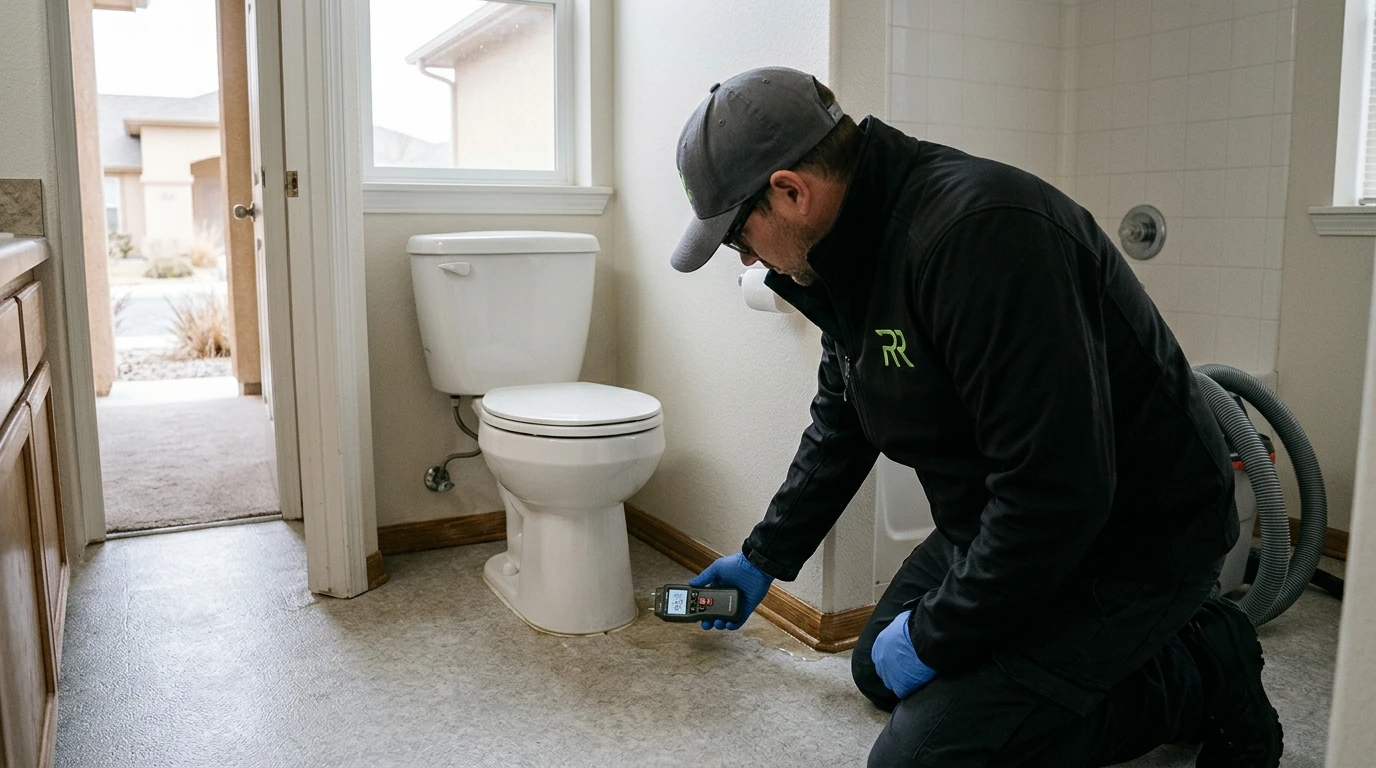
TL;DR: A toilet overflow in a Pasco home means shutting off the supply valve first, then figuring out what kind of water you’re dealing with. A running toilet that overflows clean tank water is IICRC Category 1. Anything that backed up from the drain line, or carries waste, is Category 3 and needs sewage cleanup procedures, not a mop and a box fan.
If water is still spreading across your bathroom floor in Pasco right now, the category of that water decides what happens next more than anything else. For toilet overflow water damage in Pasco, call Restoration Resource at (509) 528-1166; the crew is IICRC certified in water restoration and structural drying and runs 24/7, which matters because a Category 3 backup needs a different response than a simple running toilet.
Is This a Clean Overflow or Black Water? How to Tell Fast
A toilet overflow is clean (Category 1) only if the tank’s fill valve ran too long and the water never touched waste or came from below the trap. Water that contains urine but no feces, with no backup from beyond the trap, is Category 2, also called gray water. The moment the water contains feces, or backed up from the drain line past the trap, it’s Category 3, also called black water, under the ANSI/IICRC S500 standard.
Two quick tells: color and source. Clear water pooling from an overflowing tank or a stuck fill valve is usually Category 1. Cloudy, discolored water, or water that rose up through the bowl or floor drain instead of pouring from the tank, is Category 3 almost every time. If you’re not sure, treat it as contaminated. It’s the safer assumption and the one a restoration crew will make anyway.
What Should You Avoid Doing While You Wait?
Don’t run fans, a shop vac, or the HVAC system on standing water you haven’t categorized yet. Moving air across contaminated water spreads aerosolized particles into rooms that were never wet, and a shop vac built for dry debris isn’t rated to handle waste-contaminated water safely.
Shut off the toilet’s supply valve at the wall first; that stops the source. Keep kids and pets out of the room. Don’t walk contaminated water into carpeted areas on your shoes. If the water is Category 3, the CDC’s guidance on cleaning up safely after contact with contaminated water recommends gloves and not touching your face until you’ve washed up, and that applies here too, even in a small residential bathroom.
What If the Overflow Came From an Upstairs Bathroom?
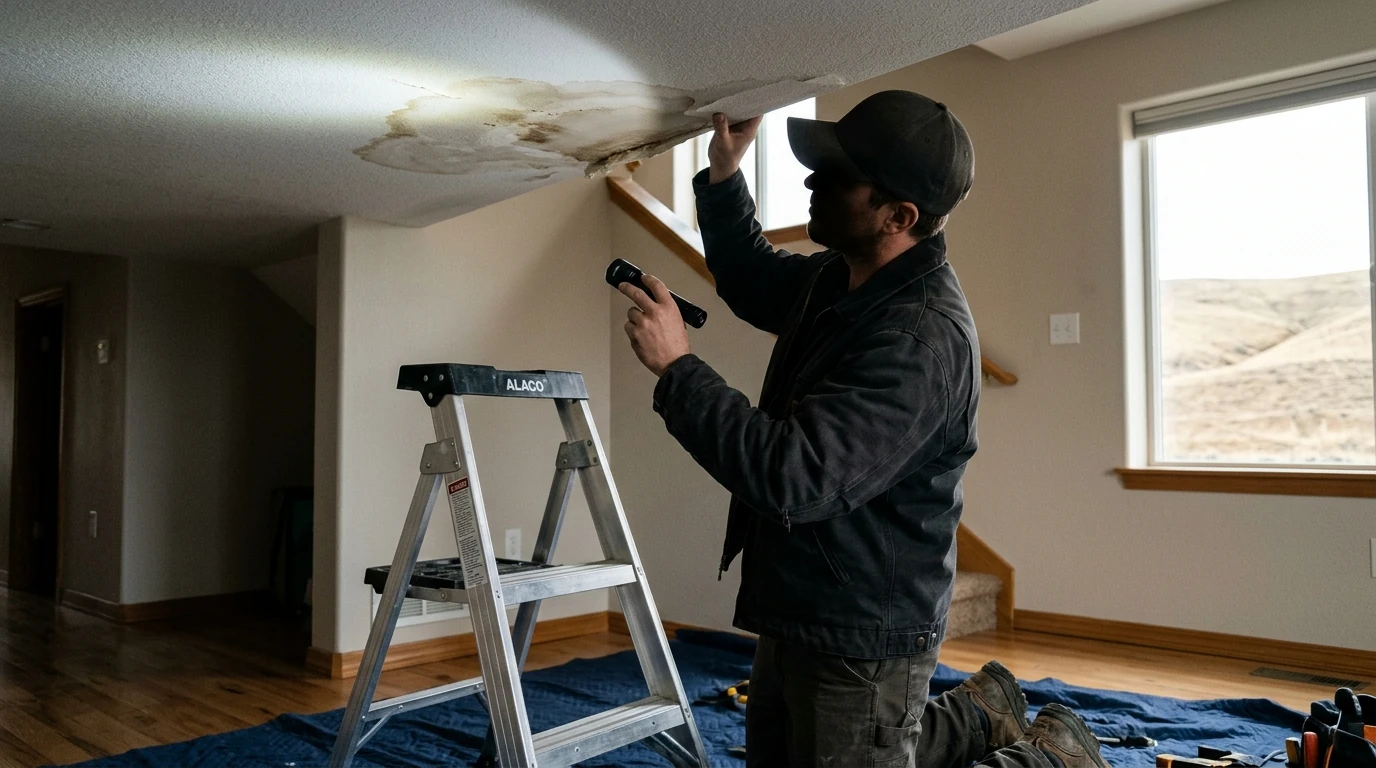
An upstairs toilet overflow almost always turns into a ceiling problem downstairs, even if the floor looked dry within an hour. Water travels along joists and pools above drywall before it ever shows a stain, so a brown ring on a West Pasco ceiling below a second-floor bath is often the tip of a wet cavity, not the whole story.
That ceiling needs a moisture reading before anyone decides whether it’s a wipe-down or a tear-out. Sagging drywall, a soft spot overhead, or a stain that keeps spreading all point to saturated insulation that has to come down. If this sounds like your situation, our post on ceiling water damage repair covers how that assessment usually goes.
Plumber or Restoration Company: Who Handles What?
A plumber clears the clog or fixes the failed part; a restoration company dries and decontaminates everything the water touched. These are two different jobs, and most homeowners end up needing both, often on the same day.
Call a plumber first if water is still actively backing up, the toilet won’t stop running, or the clog is clearly the root cause (a plumber in Pasco can usually get there within hours). Call a restoration crew once the source is stopped and you’re looking at wet flooring, a wet subfloor, or anything that touched contaminated water. Many Pasco plumbers will tell you to make that second call themselves, because mitigating the water isn’t their scope.
What Materials Usually Have to Be Thrown Out?
Carpet pad almost never survives contact with Category 3 water; it acts like a sponge and can’t be sanitized. Drywall that wicked contaminated water more than a few inches up typically gets cut out, not dried in place, per IICRC S500 guidance on porous materials.
A vanity base, baseboard, and any particleboard cabinetry under the sink are usually removed too, since particleboard swells and can’t be reliably disinfected once it’s saturated. Solid materials like tile, concrete, and some hardwoods can sometimes be cleaned and dried rather than replaced, but that call depends on how long the water sat and what it contained. This is the piece of a sewage cleanup job that surprises people: the demo is often bigger than the leak looked.
Does Homeowners Insurance Cover a Toilet Overflow?
Most homeowners policies cover a sudden, accidental toilet overflow, like a stuck fill valve, the same way they cover a burst pipe. What they typically don’t cover is damage from a backup that originated in the sewer line beyond the trap, unless you’ve added a water backup endorsement; the Insurance Information Institute has a plain-language breakdown of what standard policies include. We’ve written more on this generally in does homeowners insurance cover water damage if you want the fuller picture before you call your adjuster.
Document everything before cleanup starts: photos of the water line, what it touched, and the source if you can see it. Fast mitigation also protects the claim, since every policy expects you to limit further damage once you know about it.
A toilet overflow rarely stays a small problem once it’s had an hour to sit. Shut off the water, figure out the category, and get the right professional on the phone before you start moving things around yourself.
FAQ
Who should I call first for toilet overflow water damage in Pasco? Shut off the toilet’s supply valve, then call Restoration Resource at (509) 528-1166. The crew is IICRC certified and available 24/7, and can tell you over the phone whether this is a water-damage job, a sewage cleanup, or both before anyone drives out.
How fast does water damage start after a toilet overflow? Water starts wicking into flooring and baseboards within the first hour, and drywall can begin absorbing moisture almost as fast if it’s sitting in standing water. Mold can begin growing on wet materials within 24 to 48 hours, per the EPA, which is why same-day extraction matters even for a “small” overflow.
Can I just rent a shop vac and clean this up myself? For a clean, small overflow caught immediately, a wet/dry vac and fans can handle it. For anything contaminated, or water that reached under flooring or into a wall cavity, a consumer shop vac isn’t built to extract from porous materials or disinfect what it touches.
Does the subfloor really need to come out? Not always. Plywood subfloor that was exposed to clean water and caught fast can often be dried in place with air movers and a dehumidifier. Subfloor exposed to Category 3 water, or wet for more than 24 to 48 hours, usually gets removed because it can’t be reliably sanitized once it’s saturated.
Need help now? Call Restoration Resource at +15095281166.