
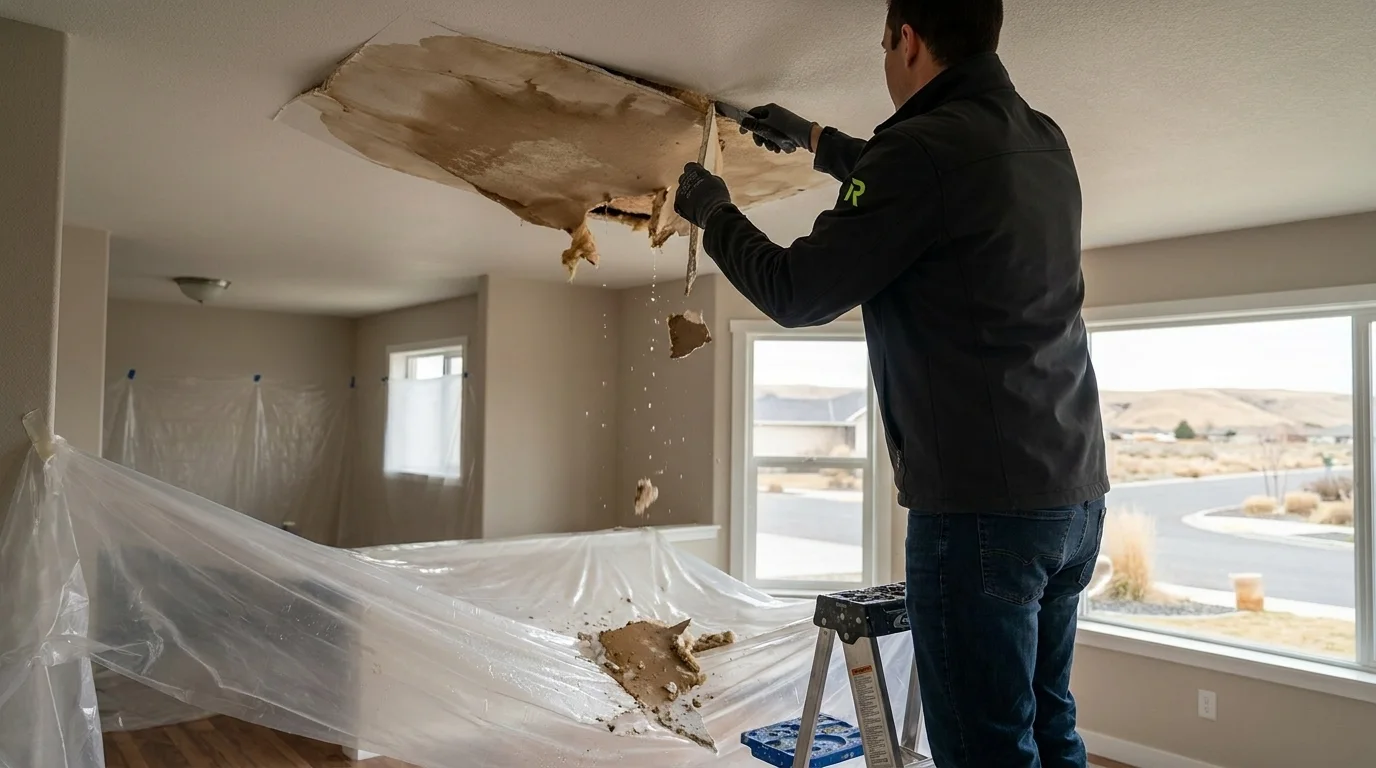
24/7 Emergency Ceiling Water Damage Repair in Pasco
24/7 emergency ceiling water damage repair in Pasco and surrounding areas. IICRC-certified, insurance billing accepted. Call +15095281166.
Water coming through your ceiling right now? Call Restoration Resource at +15095281166. We answer 24/7, and a ceiling leak is one of those problems that gets measurably worse by the hour: drywall paper delaminates, insulation above the ceiling plane saturates and sags under its own weight, and a stain the size of a dinner plate can become a collapsed section of ceiling before morning. The water itself is rarely the only story, either, since a slow ceiling leak often means something failed in the attic, the bathroom above, or the roof deck, and that source has to be found before any repair holds.
What ceiling water damage repair actually involves
Ceiling water damage repair is really two jobs stacked together: drying and repairing the ceiling assembly itself, and verifying the structure above it (joists, subfloor, roof decking, or the underside of a tub) hasn’t absorbed enough moisture to warp or rot. A water stain on a ceiling is misleading because drywall telegraphs moisture slowly. By the time you see yellowing or a brown ring, the gypsum board behind it may already be fully saturated, and the insulation sitting on top of it holds water like a sponge long after the surface looks dry. We use moisture meters and, where needed, thermal imaging to map how far the water traveled laterally across the ceiling plane, which is almost always farther than the visible stain suggests. Depending on the ceiling material (standard drywall, textured popcorn, plaster, or a suspended drop ceiling), drying and repair timelines run anywhere from a few days for a contained drywall section to over a week for plaster ceilings, which hold moisture in their lime and sand base far longer than drywall does.
Our process
- Source identification. Before we touch the ceiling, we trace the leak to its origin, whether that’s a supply line, a toilet flange, an HVAC condensate line, or a roof penetration. Repairing a ceiling without stopping the source means doing the job twice.
- Containment and controlled access. We open the ceiling at the point of saturation rather than guessing, usually starting with a small inspection cut to confirm moisture extent before committing to a larger demo line.
- Extraction and structural drying. Saturated insulation above the ceiling is removed (wet insulation doesn’t dry in place and loses its R-value permanently). Air movers and dehumidifiers are set to dry the remaining structure, joists, and any adjacent wall cavities per IICRC S500 drying standards.
- Moisture monitoring. We track moisture content in the framing and subfloor daily until readings return to dry standard, not just until the ceiling looks dry to the eye.
- Rebuild. Once the structure reads dry, we close the ceiling: hang and finish new drywall, match texture, and prime and paint so the repair doesn’t read as a patch.
What separates a good ceiling water damage response from a bad one
The most common mistake is patching the visible stain without opening the ceiling to check what’s above it. A fresh coat of stain-blocking primer over a water ring looks fine for a few weeks, then the stain bleeds back through once ambient humidity rises, or worse, mold has already started colonizing the wet insulation behind the patch. A second mistake is drying the ceiling drywall but ignoring the top plates and ceiling joists, which can hold moisture well past the point the drywall feels dry to the touch and will eventually cause nail pops or a soft sag months later. Insurance adjusters evaluating a ceiling claim generally want to see documented moisture readings at the time of mitigation, photos of the opened cavity (not just the finished repair), and a clear explanation of the source, since a slow, long-term leak is handled differently by most policies than a sudden pipe burst.
What does ceiling water damage repair cost?
Costs vary with ceiling material, the size of the affected area, how far water traveled before it was caught, and whether insulation or framing needs replacing. Every loss is different, which is why Restoration Resource provides a written scope of work before repairs begin so you know exactly what’s included. Homeowners insurance typically covers ceiling water damage repair when the water source was sudden and accidental, such as a burst supply line, but usually excludes damage from a long-term, unaddressed leak or deferred roof maintenance.
| Scenario | Typical range |
|---|---|
| Small drywall patch, single room, clean water | $300 - $900 |
| Full ceiling section replacement, drywall and insulation | $1,200 - $3,000 |
| Plaster ceiling repair, one room | $1,800 - $4,500 |
| Repair with structural (joist) drying or sistering | $3,000 - $7,500 |
| Multi-room ceiling damage from roof or attic leak | $5,000 - $12,000+ |
Seasonal & regional considerations
In the Pasco area, winter freeze events are a frequent cause of ceiling leaks when attic-adjacent pipes or exterior-wall plumbing freeze and crack, with the leak often not showing up on the ceiling below until the thaw. Summer brings a different pattern: attic temperatures climb high enough that condensation on poorly insulated ductwork or AC lines can drip steadily onto ceiling drywall for weeks before anyone notices the stain. Either way, the dry, low-humidity climate here is actually an advantage during the drying phase, since structural drying tends to move faster than it would in a coastal or high-humidity region.
Service area
Restoration Resource responds to ceiling water damage calls throughout Pasco and the surrounding Tri-Cities area, including Kennewick and Richland. Housing stock in the region spans older slab-on-grade homes with plaster ceilings to newer construction with standard drywall and truss framing, and our approach adjusts to whichever one we’re dealing with.
If water is actively coming through your ceiling, don’t wait on the repair call, schedule your moisture assessment now so we can find the source, stop further spread, and give you a written scope before anything gets opened up.
Frequently Asked Questions
Does homeowners insurance cover ceiling water damage repair?
Why does a ceiling water stain keep coming back after I paint over it?
How do I know if my sagging ceiling is about to collapse?
Will you have to remove the insulation above my ceiling?
Can you match the texture and paint on my ceiling after a repair?
Looking for the best ceiling water damage repair company in Pasco?
Restoration Resource provides licensed and insured ceiling water damage repair in Pasco, WA and the surrounding area, and has served local property owners since 2022. Customers rate us 5.0 out of 5 stars across 38 Google reviews. We answer calls 24/7 — call +15095281166 for immediate help.
Need Ceiling Water Damage Repair now?
We respond 24/7 across Pasco and surrounding WA cities.