
Mold Inspection and Testing in Pasco
24/7 mold inspection and testing in Pasco and surrounding areas. IICRC-certified, insurance billing accepted. Call +15095281166.
A musty smell that won’t go away, a water stain on the ceiling from a leak you fixed months ago, or a family member with unexplained respiratory irritation are the three most common reasons Pasco homeowners call for mold inspection and testing. Visual mold is often the easy part. The harder question is whether spores have moved into the HVAC system, behind drywall, or under flooring where you can’t see them, and whether what’s growing is a cosmetic surface issue or a structural one that needs remediation.
What mold inspection and testing actually involves
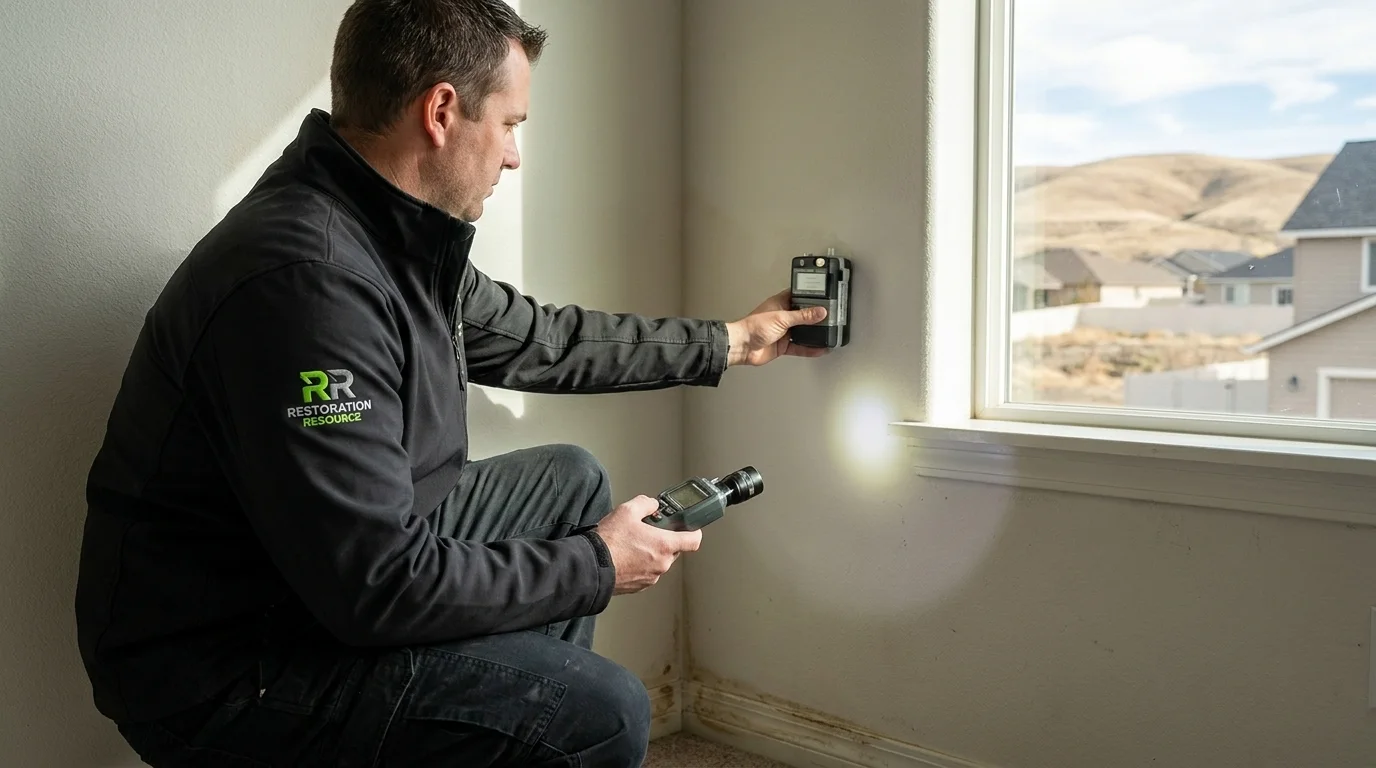
Mold inspection and testing is a diagnostic service, not a cleanup service. A technician walks the property with a moisture meter and thermal imaging camera to find elevated moisture readings in walls, subfloors, and ceiling cavities, then correlates those readings with any visible growth, discoloration, or musty odor. Depending on what’s found, the inspection may include air sampling to measure spore concentration compared to outdoor baseline levels, surface sampling (tape lift or swab) on suspect growth, and a review of the HVAC system since ductwork is one of the most common ways spores spread between rooms. Samples typically go to a third-party accredited lab, and results usually take a few business days to return. The inspection concludes with a written report identifying affected areas, probable moisture source, and whether remediation is recommended, which is the document most insurance adjusters and real estate transactions require before any mold work can proceed.
Our process
- Intake and history. We ask about past leaks, flooding, recent renovations, and when the smell or symptoms started, since that timeline narrows down the likely source fast.
- Moisture mapping. Using moisture meters and thermal imaging, we locate elevated readings in walls, subfloors, and around plumbing penetrations, even in areas with no visible staining.
- Sampling. Air samples, surface samples, or both are collected based on what the moisture mapping and visual inspection turn up. Samples are sealed, logged with chain-of-custody documentation, and sent to an independent lab.
- Lab analysis and report. Once results return, we compile a written report with spore counts, species identification where relevant, affected square footage, and a clear recommendation: no action needed, monitor, or remediate.
- Next-step guidance. If remediation is warranted, we outline the scope and containment level needed under the IICRC S520 standard so you know what to expect before any work begins.
What separates a good mold inspection from a bad one
The most common shortcut is skipping moisture mapping and sampling only where mold is already visible. That misses hidden growth behind baseboards, under cabinets, or inside wall cavities fed by a slow plumbing leak, which means a homeowner pays for a “clean” report that isn’t actually clean. Another frequent mistake is sampling without an outdoor baseline comparison, which makes indoor spore counts meaningless since some level of mold spores is normal in any air sample. Adjusters and real estate inspectors also look for proper chain-of-custody on lab samples and a report that identifies the moisture source, not just the mold itself, because remediation without fixing the source is a guaranteed repeat problem. A technician holding IICRC AMRT training is trained to connect those dots rather than report mold as an isolated finding.
What does mold inspection and testing cost?
Costs vary based on property size, how many samples are needed, and whether lab analysis is included. Every property and every suspected moisture source is different, which is why Restoration Resource provides a written scope and sample count before any testing begins. Homeowners insurance typically does not cover routine mold testing unless the mold resulted from a covered peril like a sudden pipe burst, so many inspections are paid out of pocket or as part of a real estate transaction.
| Scenario | Typical range |
|---|---|
| Visual inspection only, no lab samples | $150 - $350 |
| Inspection with 1-2 air samples | $300 - $600 |
| Inspection with air and surface (tape lift) sampling | $450 - $800 |
| Whole-house inspection, multiple sampling points | $600 - $1,200 |
| Post-remediation clearance testing | $300 - $700 |
| Pre-purchase real estate mold inspection | $300 - $600 |
Seasonal & regional considerations
The Columbia Basin’s dry summers keep ambient mold pressure relatively low compared to coastal climates, but irrigation season, basement crawlspaces, and winter condensation around older single-pane windows all create localized moisture pockets that don’t show up until someone notices a smell or a stain. Homes built before modern vapor barrier standards are more prone to trapped moisture in crawlspaces, which is a common hidden-mold source we test for even when the main living space looks fine.
Service area
Restoration Resource provides mold inspection and testing throughout Pasco and the surrounding Tri-Cities area, including Kennewick, Richland, and nearby communities across Franklin and Benton counties.
If something smells off, a past leak never quite dried out, or you need documentation before a real estate closing, request a mold inspection and testing appointment and get a clear answer instead of a guess.
Frequently Asked Questions
Does homeowners insurance cover mold inspection and testing?
How long does it take to get mold test results back?
Can mold testing find hidden mold behind walls or under flooring?
What's the difference between air sampling and surface sampling?
Do I need a mold inspection before buying or selling a home?
Looking for the best mold inspection and testing company in Pasco?
Restoration Resource provides licensed and insured mold inspection and testing in Pasco, WA and the surrounding area, and has served local property owners since 2022. Customers rate us 5.0 out of 5 stars across 38 Google reviews. We answer calls 24/7 — call +15095281166 for immediate help.
Need Mold Inspection and Testing now?
We respond 24/7 across Pasco and surrounding WA cities.