
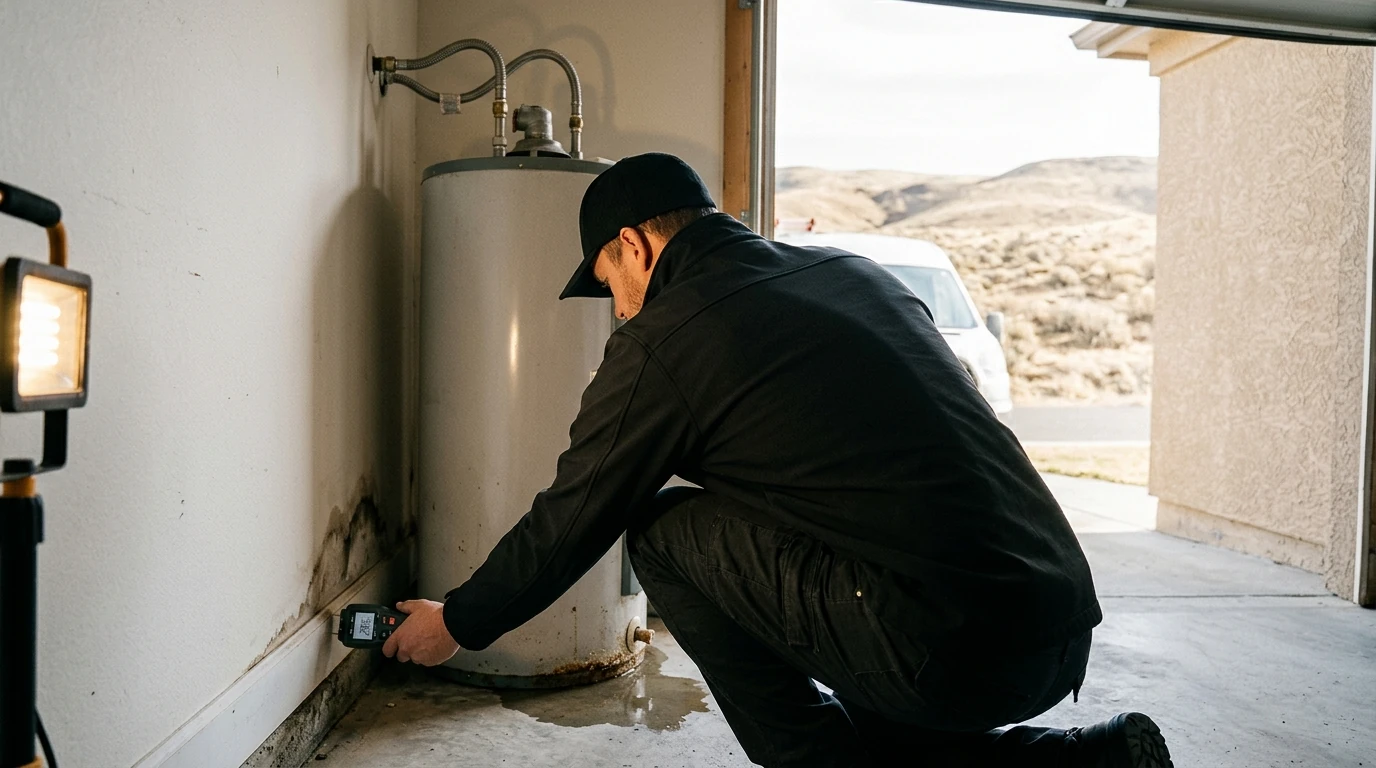
TL;DR: If a water heater leak flooded part of your Pasco home, shut off the cold water supply valve and the power or gas to the tank first. Then call a licensed, IICRC-certified restoration company for water extraction and structural drying, and call a plumber separately to repair or replace the water heater. Acting within the first few hours limits drywall, baseboard and subfloor damage and lowers the chance of mold, which can start growing within 24 to 48 hours on wet material, according to the EPA.
If you just walked into your garage or utility closet and found water pooling around the base of your water heater, or spreading under a door into the hallway, you’re facing two separate problems at once: a failed appliance and water damage that’s actively spreading into your home. Many Pasco houses keep the water heater in a garage or a small utility closet rather than a basement, since slab foundations are common across the Tri-Cities. That means a leak here often travels fast across a flat floor and under baseboards before anyone notices.
What Do I Do in the First 10 Minutes?
Shut off the cold water supply valve on top of the tank, then kill the power at the breaker (electric units) or the gas valve and pilot (gas units) before you touch standing water.
After that:
- Turn the water heater’s shutoff valve clockwise until it stops. If it’s seized or you can’t find it, shut off the home’s main water supply instead.
- Flip the breaker labeled for the water heater, or turn the gas control knob to “off” and let the pilot go out on its own. Never leave gas running near standing water.
- Move anything you can lift off the wet floor (boxes, stored items, rugs) to stop secondary damage.
- Take photos of the leak, the water line on the wall, and the water heater’s data plate (the model and serial number) before you touch anything further. Your insurer and your plumber will both ask for this.
Don’t try to drain or move the tank yourself if it’s actively rupturing. A full 40 to 50 gallon tank is heavy and the water can be scalding hot.
Who Do I Call First: a Plumber or a Restoration Company?
Call the restoration crew first if water is already on the floor, because drying starts a clock that a plumbing repair can’t fix. Call the plumber in parallel to diagnose and repair or replace the unit itself.
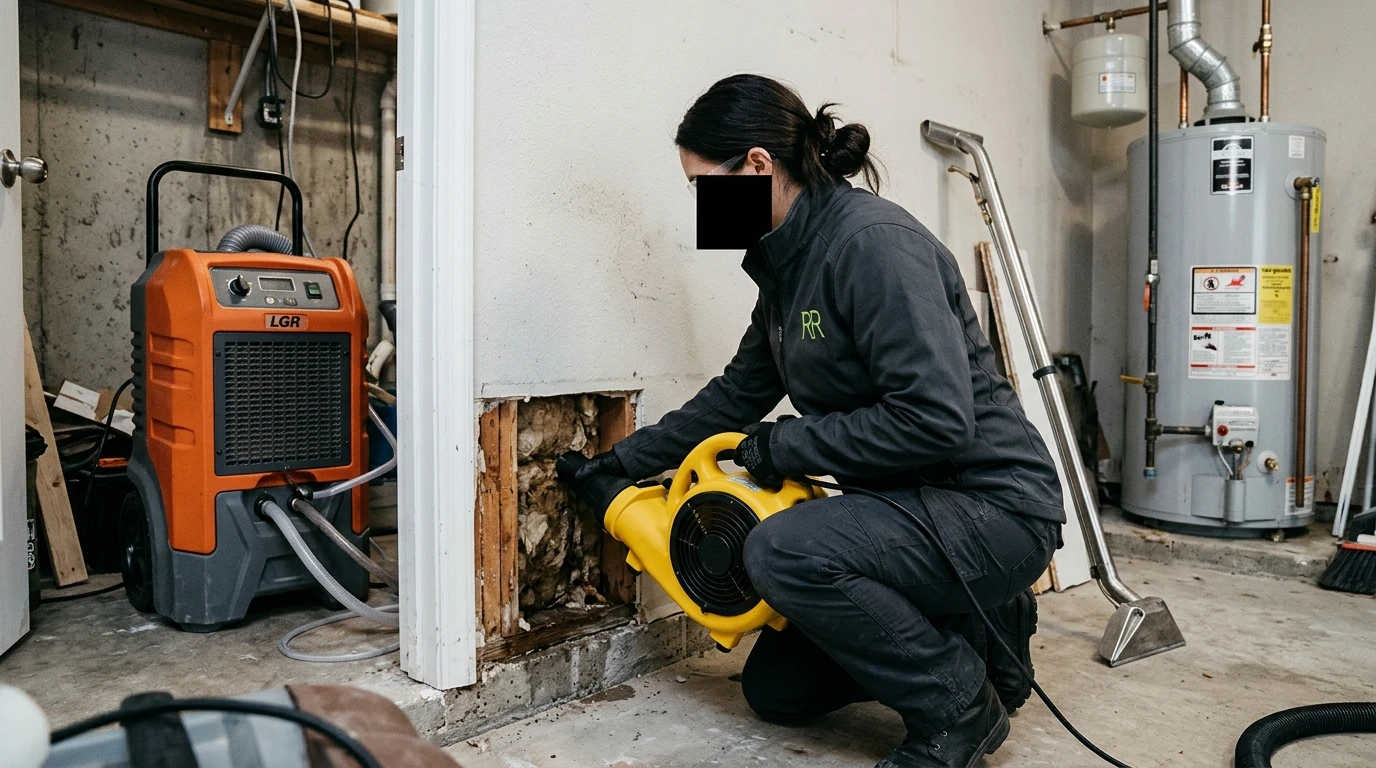
These are two different jobs with two different licenses. A plumber’s job is the water heater: is it a cracked tank, a failed drain valve, or a tripped temperature-and-pressure relief valve, and does it need a part or a full replacement. A restoration crew’s job is everything the water touched: extracting standing water, pulling baseboards and wet drywall where needed, and running air movers and a dehumidifier to dry the structure to a dry standard, following the ANSI/IICRC S500 water damage restoration standard.
If the leak is small and the water hasn’t spread past a floor drain or a small mat area, a plumber alone may be enough. If water has reached drywall, baseboards, a subfloor, or an adjoining room, get a restoration crew out before you schedule the plumbing repair; wet building materials lose value by the hour. For a broader walkthrough of the first day, see what to do in the first 24 hours after water damage.
Is My Water Heater Leak a Burst Tank or a Slow Leak, and Does It Matter?
A burst or split tank means total failure, usually calling for full replacement, while a slow leak from the drain valve or the temperature-and-pressure relief valve may be a repairable part.
A catastrophic tank failure (a rusted-through seam, a corroded weld) dumps the full tank volume at once, often 40 to 50 gallons, and floods an area fast. A slow leak is different: water beading at the base, a drip from the relief valve, or moisture around a fitting can run for days before anyone notices, which often means it has already wicked into flooring, framing, or an adjoining wall before the obvious puddle appears. Tell both the plumber and the restoration crew which kind you’re dealing with; it changes how far they check for hidden moisture.
How Much Does Water Heater Leak Cleanup Cost in Pasco?
Most Pasco homeowners pay in the range documented for general water extraction and drying work, with the final number driven by how far the water traveled and what materials it reached.
A contained leak in a garage or utility closet, caught quickly, tends to run toward the lower end of typical regional water cleanup pricing. A leak that reached a finished room, soaked carpet pad, or sat long enough to wick into a subfloor costs more because more material has to be removed, dried, or replaced. Our water damage restoration cost guide for Washington breaks down the specific cost ranges and what drives them. Every job still gets a written scope before work starts; no two leaks cause the same damage.
Will My Homeowners Insurance Cover a Water Heater Leak?
Most standard homeowners policies cover the sudden water damage from a water heater failure, but the water heater itself is usually treated as a separate, often excluded, mechanical breakdown.
That split surprises a lot of homeowners. If the tank suddenly ruptures and floods your utility closet, the resulting damage to flooring, drywall, and baseboards is typically covered as sudden and accidental water damage. But the cost to replace the water heater itself often falls under wear-and-tear or mechanical-failure exclusions, which standard homeowner policies generally don’t cover, per the Insurance Information Institute. A slow leak that was left unaddressed for weeks or months is more likely to be denied entirely as a maintenance issue. Document the failure with photos right away, and read our full guide to what homeowners insurance covers for water damage before you file.
What Happens If the Water Reached the Drywall, Baseboards or Subfloor?
Wet drywall, baseboards and subfloor need to be measured with a moisture meter and dried to a verified dry standard, not just air-dried until they look dry.
Mold can start growing on wet building material within 24 to 48 hours, according to the EPA, so the timeline matters more than it feels like it should. A restoration crew sets air movers and a dehumidifier, checks moisture content daily with a meter, and removes baseboards or cuts drywall where water has wicked up the wall cavity. If drying is delayed past a day or two, or if the water sat for a while before it was found, a mold inspection is worth scheduling even if nothing is visible yet.
If you’re staring at a wet garage floor or a soaked hallway right now, the order is simple: shut off the water and power, call a restoration crew for extraction and drying, and loop in a plumber for the unit itself. Call now at (509) 528-1166 if you need extraction started today.
About Restoration Resource
Restoration Resource is an IICRC Certified Firm serving Pasco, Kennewick, Richland and the surrounding Tri-Cities since 2022 (WA license RESTORL764CE). The company’s technicians hold IICRC water (WRT), structural drying (ASD), mold (AMRT) and fire and smoke (FSRT) certifications, and the firm is licensed and insured. Restoration Resource handles water, fire, smoke, storm, sewage and mold damage calls across the region on a 24/7 basis.
Frequently Asked Questions
Who should I call first for a water heater leak in Pasco? Shut off the water heater’s supply valve and power or gas first. Then call a licensed, IICRC-certified restoration company for water extraction and drying, the same company you can reach at (509) 528-1166, and call a plumber separately to repair or replace the unit.
Does homeowners insurance cover a water heater leak in Pasco, WA? Usually it covers the sudden water damage the leak caused to flooring, drywall and baseboards, but it typically does not cover replacing the water heater itself, which is treated as a mechanical failure. Check your specific policy language and document the failure with photos.
How long does it take to dry out a water heater leak? A contained leak caught quickly can dry in 2 to 3 days with air movers and a dehumidifier running continuously. A leak that soaked a subfloor or wall cavity can take longer, since drying is confirmed with moisture meter readings, not a visual check.
Can I just dry a water heater leak myself with fans? Household fans can help with surface water on a hard floor, but they don’t reach moisture trapped inside drywall, baseboards or subfloor material. If the water traveled past the visible puddle, a moisture meter check is the only way to know it’s actually dry before mold becomes a risk.