
TL;DR: In Washington, water damage restoration typically runs $1,200 to $3,500 for a single clean-water room and $3,000 to $12,000+ for multi-room or contaminated-water losses. Sewage backups and large losses can exceed $10,000. The biggest cost drivers are water category (clean, gray, or black), how many rooms and materials are affected, and how fast drying starts. Most homeowners policies cover sudden water damage after the deductible, typically $500 to $2,500.
If a dishwasher supply line let go overnight or a water heater split in your Pasco garage, you’re probably staring at wet flooring and wondering what this is going to cost before you even call anyone. Tri-Cities homes see this constantly: aging water heaters, slab leaks in sandy soil, and irrigation or sprinkler lines that back up into a crawlspace. The number depends almost entirely on how much water got in and how long it sat before drying started.
How Much Does Water Damage Restoration Cost in Washington?
Most Washington homeowners pay between $1,200 and $7,500 for water damage restoration, with single-room clean-water losses at the low end and multi-room or contaminated losses pushing higher. Severe losses involving sewage, structural drying across a whole floor, or mold growth can run $10,000 or more.
The range is wide because “water damage” covers everything from a few square feet of wet carpet to a flooded basement with saturated drywall and subfloor. Restoration pricing is typically built from square footage dried, equipment days (air movers and dehumidifiers billed per day), and any demolition needed to reach wet material behind walls or under flooring.
Water Damage Restoration Cost Table
| Scenario | Typical Cost Range |
|---|---|
| Single room, clean water (Category 1) | $1,200 - $3,500 |
| Multi-room, clean to gray water | $3,000 - $7,500 |
| Basement or crawlspace flooding | $2,500 - $6,000 |
| Category 3 water (sewage backup) | $5,000 - $10,000+ |
| Water damage with secondary mold growth | $4,000 - $12,000+ |
| Whole-house or large commercial loss | $10,000 - $50,000+ |
These are typical industry ranges, not a quote. Every property and every loss is different, and a written scope of work after an on-site assessment is the only way to get an accurate number for your specific damage.
What Factors Affect Water Damage Restoration Costs in WA?
The water’s category, the square footage affected, and how quickly drying begins are the three biggest factors in the final bill. A loss caught within hours costs far less than one that sat overnight, because saturation spreads into subflooring, baseboards, and wall cavities the longer water sits.
Water is classified under the IICRC S500 standard into three categories. Category 1 is clean water from a supply line or appliance. Category 2, also called gray water, has some contamination (a washing machine overflow, for example). Category 3, or black water, includes sewage backups and water that’s been sitting long enough to grow bacteria, and it always costs more because of the sanitizing and disposal required.
Other factors that move the price:
- Materials affected. Hardwood, tile, and cabinetry cost more to restore or replace than carpet and drywall.
- Response time. Water that sits more than 24-48 hours raises the odds of secondary mold growth, which adds remediation cost.
- Access and structure. Crawlspaces, finished basements, and multi-story leaks that traveled through ceilings take more equipment and labor.
- Code-required upgrades. If the repair triggers a code update (GFCI outlets, updated insulation), that’s an added line item.
For Tri-Cities properties specifically, older water heaters and slab-on-grade foundations common in Pasco, Kennewick, and Richland neighborhoods are frequent sources of these losses, and slab leaks in particular often go unnoticed longer because the water seeps rather than pools visibly.
Does Insurance Cover Water Damage Restoration in WA?
Most homeowners policies cover water damage restoration when the cause is sudden and accidental, like a burst pipe or failed appliance line, but exclude damage from a gradual leak or lack of maintenance. Coverage kicks in after your deductible, which on a typical Washington policy runs $500 to $2,500.
The distinction matters a lot. A pipe that bursts overnight is almost always covered. A slow drip behind a wall that’s been seeping for months, discovered only when the drywall finally bubbles, is often denied as a maintenance issue. This is why documentation from the first visit matters: moisture readings, photos, and a written timeline of when the damage was discovered help support a claim either way.
Our earlier guide on homeowners insurance and water damage breaks down coverage patterns in more detail. A licensed, IICRC-certified restoration company should document moisture levels and affected materials as part of the mitigation process, which is the paperwork most adjusters ask for before approving a claim.
What Happens During Water Damage Restoration?
Water damage restoration follows a set sequence: inspection and moisture mapping, water extraction, structural drying, monitoring, and finally cleaning and any needed repairs. Skipping steps, especially drying time, is the most common reason a job has to be redone.
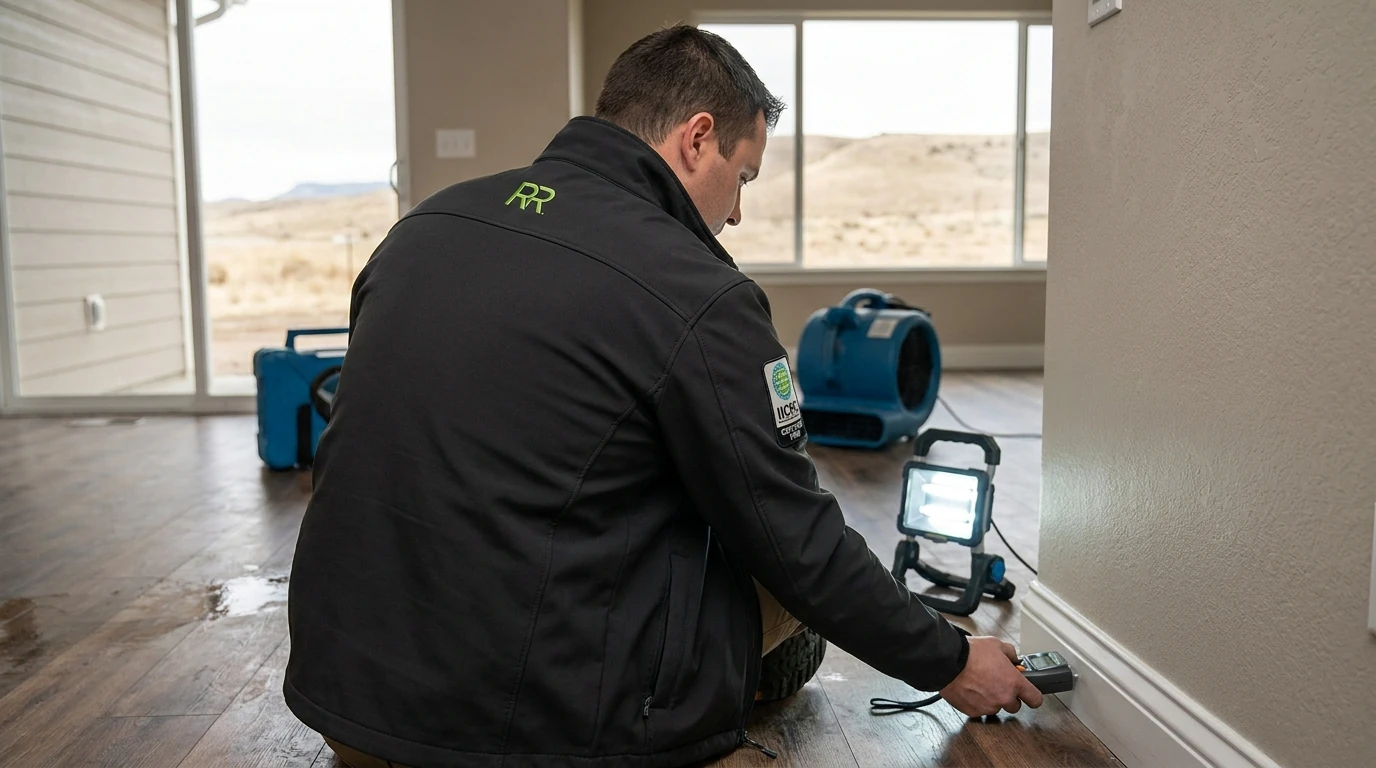
- Inspection and moisture mapping. A technician uses a moisture meter to map how far water traveled, often further than it looks from the surface.
- Extraction. Standing water is pulled out with truck-mounted or portable extractors, usually within the first hour or two on-site.
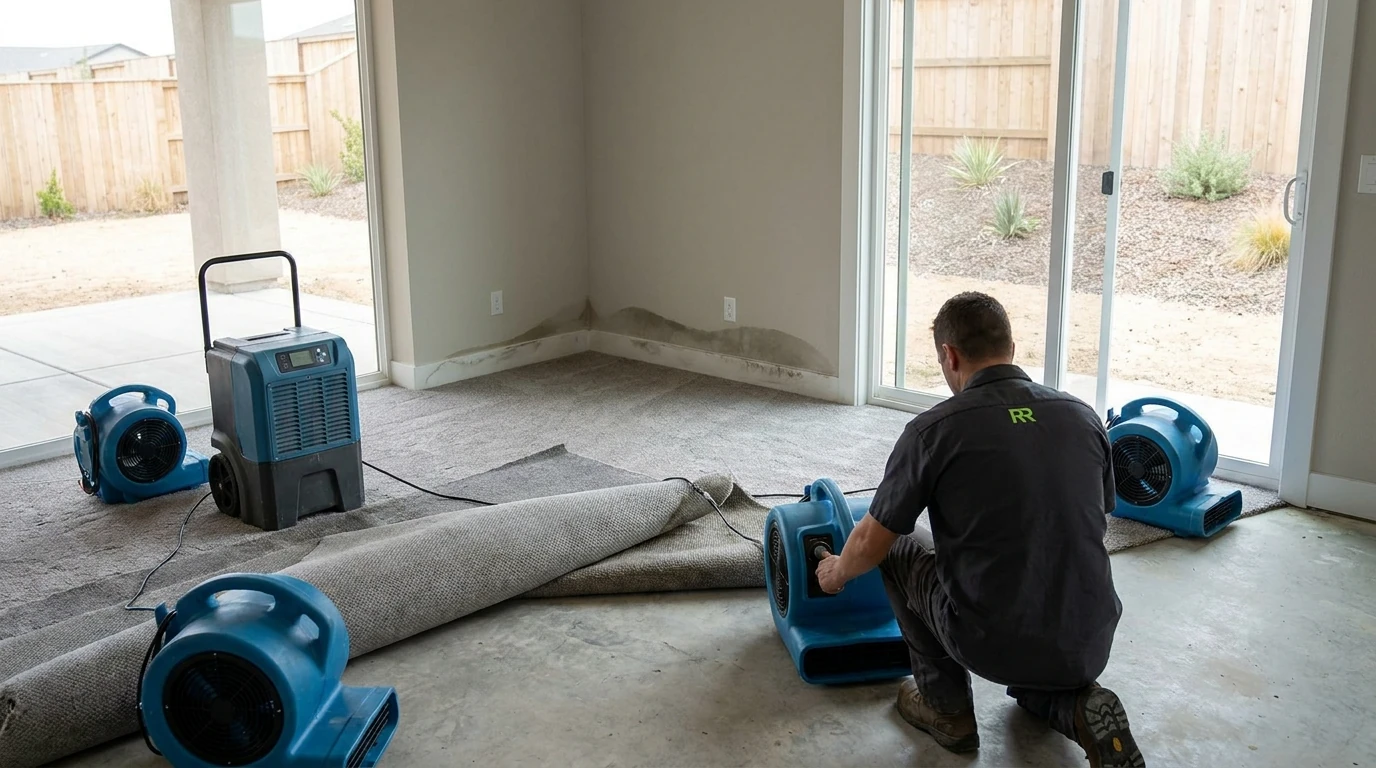
- Structural drying. Air movers and LGR dehumidifiers run for several days, with daily moisture checks against dry standards set by the IICRC S500 guidelines.
- Monitoring and adjustment. Equipment placement shifts as materials dry; this is where many DIY attempts fail, because pulling equipment too early leaves moisture trapped in wall cavities.
- Cleaning and sanitizing. Affected surfaces are cleaned, and antimicrobial treatment is applied if the water category warrants it.
- Repairs. Drywall, flooring, trim, and any structural materials removed during the dry-out are replaced.
If drying drags past 3-5 days or if materials were wet before anyone noticed, check for musty odor, discoloration, or visible spots, which the EPA’s mold guidance notes can start within 24-48 hours in warm, damp conditions. Our post on the first 24 hours after water damage covers what to do before a crew arrives.
Getting a written scope before work begins protects you from surprise costs. Call Restoration Resource at (509) 528-1166 for an on-site assessment and a documented estimate before any work starts.
About Restoration Resource
Founded in 2022 and based in Pasco, Washington, the company is an IICRC Certified Firm holding WRT (water), ASD (structural drying), AMRT (mold), and FSRT (fire and smoke) credentials, and is licensed (WA contractor license RESTORL764CE) and insured. The team serves Pasco, Kennewick, Richland, West Richland, and surrounding Tri-Cities communities with water damage restoration, mold remediation, fire damage restoration, storm damage restoration, and sewage cleanup, operating a 24/7 emergency line.