
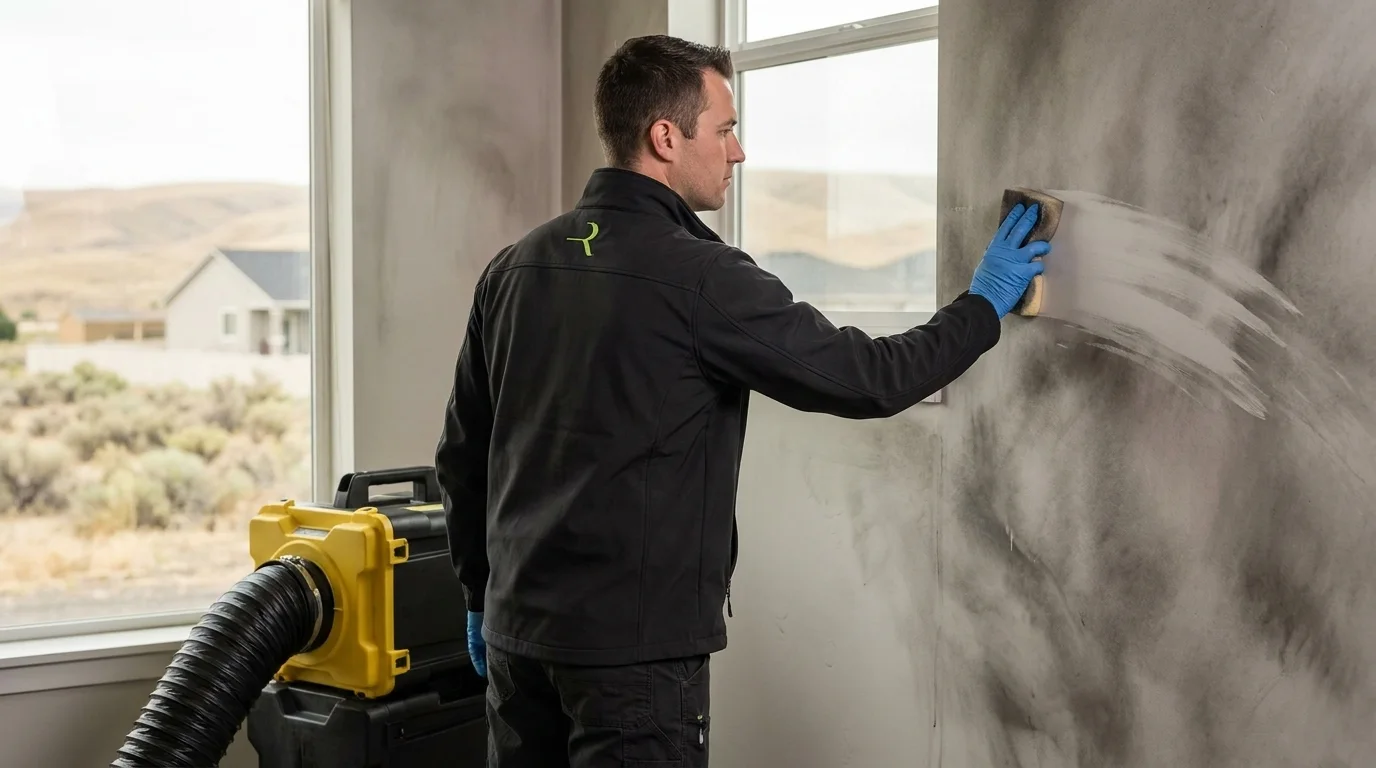
24/7 Emergency Smoke Damage Restoration in Pasco
24/7 emergency smoke damage restoration in Pasco and surrounding areas. IICRC-certified, insurance billing accepted. Call +15095281166.
Smoke damage emergency in Pasco? We answer 24/7 and work directly with your insurance carrier from the first call. Smoke behaves differently than the fire itself: soot particles are acidic, sub-micron in size, and they migrate into HVAC ducting, wall cavities, and porous materials within hours of a fire being extinguished. A house that looks untouched by flame can still have a sharp, embedded odor and etched metal fixtures two rooms away from where the fire started. The longer smoke residue sits, the more it bonds to surfaces and the harder it is to remove without replacing the material underneath.
What smoke damage restoration actually involves
Smoke damage restoration is the work of identifying what kind of residue is present, removing it from every surface it reached, and neutralizing the odor at its source rather than masking it. This is different from fire damage reconstruction, which rebuilds what burned. Smoke cleanup deals with the aftermath that spreads well beyond the fire’s footprint: ceiling tiles, HVAC coils, cabinet interiors, upholstery fibers, and electronics. Equipment typically includes HEPA air scrubbers, thermal foggers, and in some cases ozone generators for unoccupied spaces, alongside degreasing agents matched to the residue type. Timelines vary widely: a single-room kitchen fire with light residue might clear in two to three days, while a whole-house wildfire smoke infiltration with HVAC contamination can take one to two weeks of cleaning and re-testing before the odor is fully resolved.
Our process
- Soot and residue characterization. We identify whether the residue is protein-based (from a kitchen or grease fire), synthetic (from burning plastics and furnishings), or wildfire ash carried in through doors, windows, and HVAC intake. Each type requires a different cleaning agent and approach.
- Source and odor containment. Affected rooms are sealed off and HVAC systems are shut down or isolated to stop residue from recirculating into unaffected areas while work is underway.
- Surface and contents cleaning. Hard surfaces, cabinetry, and fixtures are wiped down with residue-specific cleaners; soft contents such as upholstery and drapery are either cleaned on-site or packed out for off-site treatment depending on condition.
- Thermal fogging or ozone treatment. For odor that has penetrated porous materials, we use thermal fogging to drive deodorizer into the same pathways the smoke traveled, or ozone treatment in vacated spaces when appropriate.
- Verification pass. Before closing out a job, we re-inspect treated areas and ductwork to confirm odor and visible residue are gone, not just reduced to where they’re temporarily undetectable.
What separates a good smoke damage response from a bad one
The most common mistake is treating smoke damage as a surface-cleaning job and skipping the HVAC system entirely. If ductwork isn’t cleaned or isolated, residue recirculates for weeks after the “visible” cleanup is done, and the odor returns as soon as the system kicks on. Another frequent miss is using a generic all-purpose cleaner on protein residue, which can actually set the odor into the surface instead of lifting it. Insurance adjusters evaluating a smoke claim typically look for documented residue testing (to confirm the type of soot and justify the cleaning method used), room-by-room photos before and after treatment, and evidence that odor-causing materials that couldn’t be fully restored, like heavily saturated carpet pad or insulation, were identified and addressed rather than papered over with deodorizer.
What does smoke damage restoration cost?
Costs depend on the size of the affected area, the type of residue, and whether HVAC or contents cleaning is involved. These are typical industry ranges, not a quote: every loss is different, and Restoration Resource provides a written scope of work before any cleaning begins so you know what’s covered and what it costs.
| Scenario | Typical range |
|---|---|
| Single room, light surface soot | $500 - $1,500 |
| Kitchen fire, protein residue, cabinets affected | $1,500 - $4,000 |
| Whole-house smoke infiltration, HVAC cleaning included | $4,000 - $10,000 |
| Wildfire ash cleanup, multiple rooms | $2,500 - $7,000 |
| Contents pack-out and off-site cleaning | $1,000 - $5,000+ |
Most homeowners insurance policies cover smoke damage restoration when it follows a covered fire event, including residue cleanup, odor treatment, and necessary HVAC decontamination, but coverage details vary by policy and carrier.
Seasonal & regional considerations
Summer and early fall bring wildfire smoke events to the Columbia Basin, and homes in Pasco with older HVAC systems or less sealed envelopes tend to pull more ash and particulate indoors during these periods even without a structure fire nearby. Winter months bring a different pattern: more heating-related and space-heater fires in older homes, often with localized but intense smoke damage concentrated in one or two rooms. Either way, the longer residue sits in our dry climate, the more it bonds to surfaces, so early response matters more than people expect.
Service area
Restoration Resource responds to smoke damage calls throughout Pasco and the surrounding Tri-Cities area, including Kennewick, Richland, and nearby communities across Franklin and Benton counties.
If smoke odor or soot residue is present in your home or business, begin smoke and soot removal now by calling Restoration Resource. We’ll document the residue type, scope the affected areas, and start containment before the odor has a chance to set further into your home’s materials.
Services We Handle
- Soot Removal
Frequently Asked Questions
Does homeowners insurance cover smoke damage restoration?
What's the difference between protein soot and synthetic soot, and why does it matter?
Can smoke odor really get into rooms the fire never reached?
Will wildfire smoke that drifted into my house need the same treatment as a house fire?
How long does it take for smoke odor to set permanently into a home?
Looking for the best smoke damage restoration company in Pasco?
Restoration Resource provides licensed and insured smoke damage restoration in Pasco, WA and the surrounding area, and has served local property owners since 2022. Customers rate us 5.0 out of 5 stars across 38 Google reviews. We answer calls 24/7 — call +15095281166 for immediate help.
Need Smoke Damage Restoration now?
We respond 24/7 across Pasco and surrounding WA cities.