
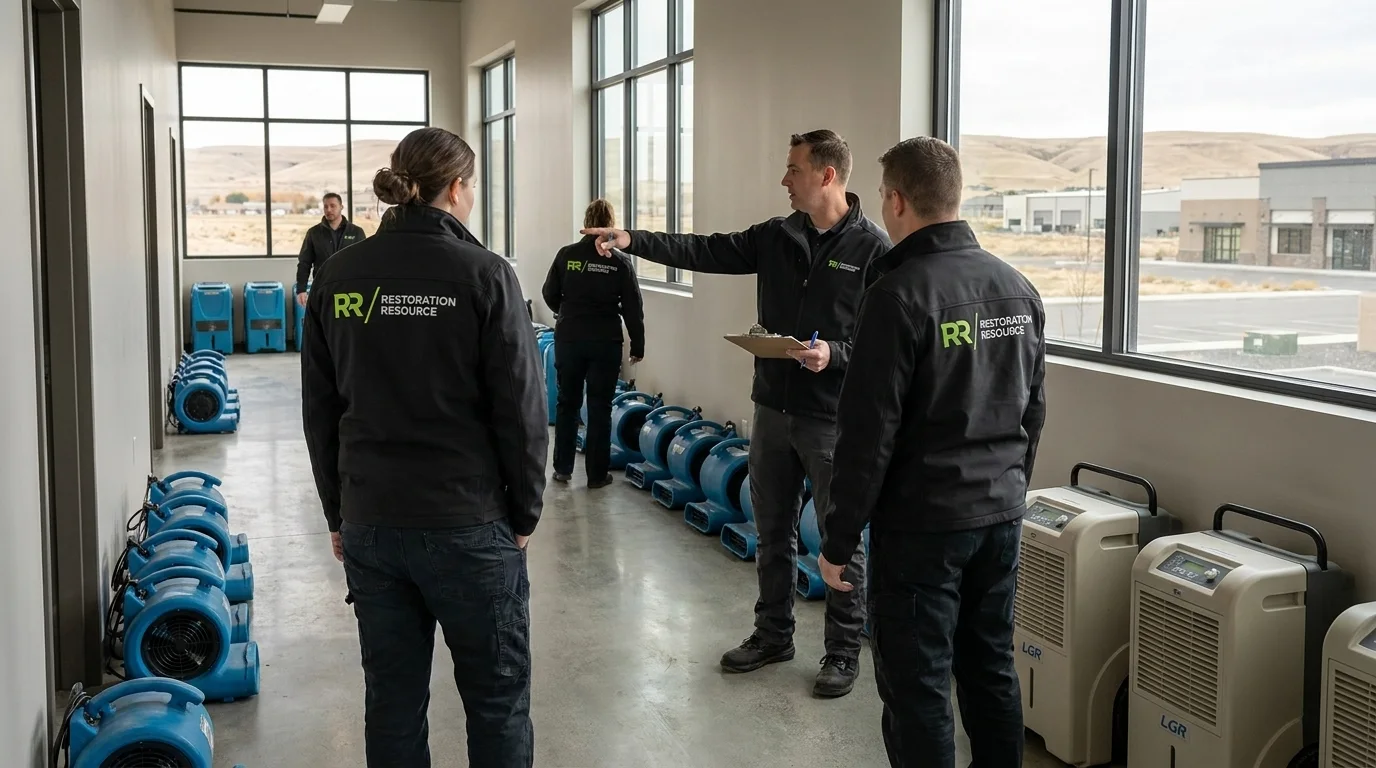
Large Loss and Catastrophic Response in Pasco
24/7 large loss and catastrophic response in Pasco and surrounding areas. IICRC-certified, insurance billing accepted. Call +15095281166.
When a water line fails on an upper floor of a commercial building, or a fire moves through multiple units of an apartment complex, the loss stops being a single-room job and becomes a logistics problem: how many crews, how much equipment, how fast can drying and demolition move before secondary damage multiplies the claim. Large loss and catastrophic response is built for that scale, coordinating mitigation across multiple structures, floors, or tenants while keeping a large loss adjuster supplied with the documentation a claim of that size requires.
What large loss and catastrophic response actually involves
A large loss is generally defined by scale and complexity rather than a single dollar figure: multi-unit residential buildings, commercial and industrial facilities, hotels, schools, and properties affected by regional storm events all fall into this category. The work involves mobilizing multiple extraction and drying crews simultaneously, running industrial dehumidification and air movement across tens of thousands of square feet, and managing demolition and debris removal on a schedule that limits business interruption or displacement. Project oversight matters as much as equipment here: someone has to track moisture readings room by room across an entire building, sequence trades so drying doesn’t get undone by a leaking roof tarp, and keep a paper trail detailed enough to support a claim that may run into six or seven figures.
Our process
- Rapid site assessment and scope sizing. Crews walk the full affected area, not just the obvious damage, to map scope before mobilization decisions are made. This determines how many trucks, drying units, and technicians the loss actually requires.
- Mobilization and phased mitigation. Equipment and crews are deployed in stages so extraction and emergency drying start immediately in the worst-affected zones while assessment continues elsewhere in the building.
- Structural drying and moisture monitoring at scale. Dehumidification and air movement are tracked by zone using moisture mapping and daily logs, since a building this size can have wet pockets in framing or subfloor long after surfaces read dry.
- Documentation built for large loss adjusters. Photos, moisture logs, equipment placement records, and daily progress reports are compiled continuously, formatted the way commercial carriers and large loss adjusters expect to see a multi-structure claim documented.
- Coordination through completion. Mitigation findings are handed off cleanly if reconstruction or specialty trades are needed, with a consistent point of contact managing the project rather than a rotating set of crews.
What separates a good large loss response from a bad one
The most common mistake on catastrophic losses is treating them like an oversized version of a one-room job: sending a standard crew, under-resourcing dehumidification, and letting documentation lag behind the work. On a property this size, incomplete moisture mapping means wet material gets missed in a stairwell or a mechanical room, and that gap often doesn’t surface until mold or a sagging ceiling shows up weeks later, by which point it’s a bigger claim than it needed to be. Large loss adjusters are also looking for a specific kind of paper trail: equipment run-time logs, psychrometric readings by zone, and clear before-and-after photo documentation tied to dates. A response that can’t produce that level of detail slows down claim approval and payment, regardless of how clean the physical work was. Good operators also sequence work to protect occupied portions of a building, so tenants or business operations aren’t shut down longer than the actual damage requires.
What does large loss and catastrophic response cost?
Costs for large loss and catastrophic events vary enormously depending on square footage, number of structures or units involved, category of water or extent of fire and smoke damage, and how much of the work is mitigation versus reconstruction. The ranges below are typical industry figures for this scale of loss, not a quote: every property gets a written scope of work before mobilization so the owner and the carrier both know what’s being authorized.
| Scenario | Typical range |
|---|---|
| Multi-unit apartment building, clean water, partial floors affected | $50,000 - $150,000 |
| Commercial building, category 2/3 water, full floor | $75,000 - $250,000 |
| Hotel or multi-tenant property, multi-floor flood | $150,000 - $500,000+ |
| Industrial or warehouse fire and smoke, partial structure | $200,000 - $750,000+ |
| Mixed-use structure, combined fire, smoke, and water damage | $300,000 - $1,000,000+ |
Most commercial property policies cover large loss mitigation and structural drying, and many carriers assign a dedicated large loss adjuster once a claim crosses their internal threshold; policy limits, business interruption coverage, and exclusions for certain causes of loss vary by carrier and should be confirmed early.
Seasonal & regional considerations
The Tri-Cities see wide seasonal swings, hot dry summers followed by winter freeze events that can hit aging commercial plumbing and irrigation lines hard, and that’s often where a large loss starts: a frozen or burst line in a building with multiple units sharing a water supply. Low regional humidity for much of the year helps surface drying move faster than it would in a wetter climate, but it doesn’t change the fact that water trapped behind drywall, under slab-on-grade flooring, or inside wall cavities in older commercial buildings needs real moisture monitoring, not just visual inspection, before a space is called dry.
Service area
Restoration Resource responds to large loss and catastrophic events throughout Pasco and across the Tri-Cities, including Kennewick and Richland, as well as surrounding Franklin and Benton County communities, scaling crew and equipment deployment to the size of the property and loss.
If a property you manage or own is facing a loss that spans multiple units, floors, or buildings, call Restoration Resource at (509) 528-1166 to start a scope assessment and get mitigation crews mobilized before the damage multiplies.
Frequently Asked Questions
Does homeowners or commercial property insurance cover large loss and catastrophic restoration?
What actually qualifies a loss as 'large loss' rather than a standard claim?
How many crews and how much equipment does a catastrophic response actually require?
What kind of documentation does a large loss adjuster expect to see?
Can a large loss response keep part of a building occupied or operating during mitigation?
How long does structural drying take on a multi-floor or multi-building loss?
Looking for the best large loss and catastrophic response company in Pasco?
Restoration Resource provides licensed and insured large loss and catastrophic response in Pasco, WA and the surrounding area, and has served local property owners since 2022. Customers rate us 5.0 out of 5 stars across 38 Google reviews. We answer calls 24/7 — call +15095281166 for immediate help.
Need Large Loss and Catastrophic Response now?
We respond 24/7 across Pasco and surrounding WA cities.