
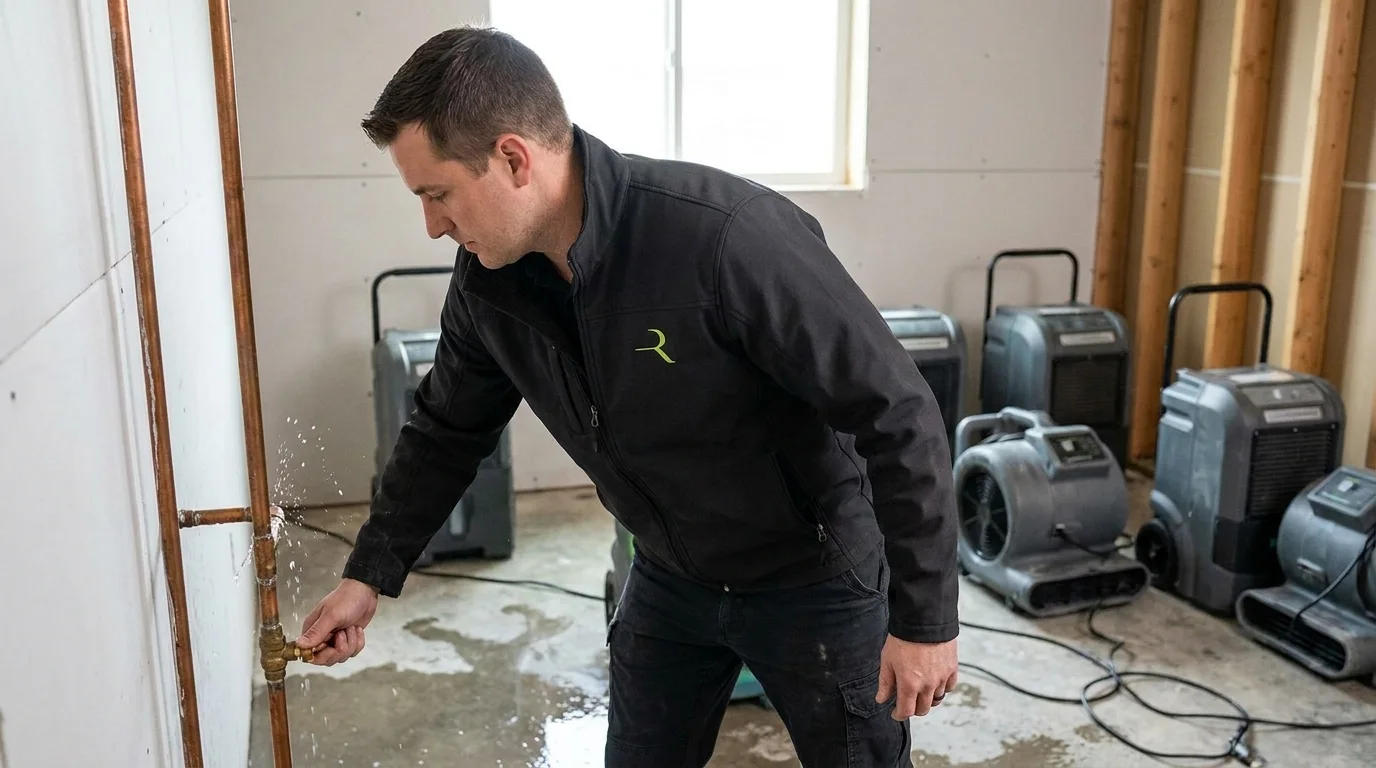
24/7 Emergency Burst Pipe Cleanup and Repair in Pasco
24/7 emergency burst pipe cleanup and repair in Pasco and surrounding areas. IICRC-certified, insurance billing accepted. Call +15095281166.
Pipe burst in your Pasco home? A cracked supply line or split copper joint can push out hundreds of gallons before anyone notices, soaking subfloors, wicking into drywall, and pooling under cabinets within minutes. We answer 24/7, and the faster that water gets shut off and pulled out, the less demolition you end up paying for.
What burst pipe cleanup and repair actually involves
A burst pipe is a plumbing failure and a water damage event happening at the same time, which is why it needs to be handled as both. The plumbing side means locating the break, usually a frozen and cracked copper line, a failed PEX fitting, or a corroded galvanized joint, and stopping the flow at the source. The restoration side means extracting standing water, pulling baseboards or opening wall cavities where water has traveled, and setting up drying equipment before the subfloor or framing starts to swell or delaminate. Depending on how long the line was flowing before discovery, this can range from a contained spill under one sink to water that has traveled along joists into rooms far from where the pipe actually broke.
Timelines vary with the volume of water and the materials involved. A quick shutoff with wet-vac extraction and a few drying mats might wrap in a day or two. A pipe that ran unnoticed overnight behind a finished wall often means cutting access, running air movers and a dehumidifier for three to five days, and coordinating a drywall patch once moisture readings confirm the cavity is dry.
Our process
- Shutoff and source confirmation. We verify the water is off at the main or the affected branch line and confirm where the break actually is, since the wet spot on the ceiling is rarely directly below the pipe.
- Extraction and demolition as needed. Standing water is pulled with truck-mount or portable extractors, and any drywall, insulation, or flooring that’s saturated beyond drying gets removed so trapped moisture doesn’t turn into a mold problem later.
- Pipe repair. The damaged section of pipe is cut out and repaired or replaced so you’re not drying a space that’s still getting fed water.
- Structural drying with monitoring. Air movers, dehumidifiers, and sometimes injection drying for wall cavities run on a schedule, with daily moisture readings on wood framing, subfloor, and drywall until numbers hit dry standard.
- Reassembly. Baseboards, patched drywall, and flooring go back once the structure reads dry, not on a fixed calendar day.
What separates a good burst pipe response from a bad one
The most common mistake is treating the visible wet spot as the whole job. Water from a pipe break travels along the path of least resistance, which means it can run down a stud bay and show up two rooms away, or sit under a vinyl floor without ever reaching the surface. A thorough response checks moisture content in the surrounding framing and subfloor, not just the obvious puddle.
Another gap is drying without removing what can’t be dried. Insulation that’s been saturated rarely dries back to its original R-value and often gets replaced rather than dried in place. Baseboards and MDF trim swell and should usually come off rather than be dried against.
Adjusters generally want documented moisture readings at the start and end of drying, photos of the affected materials before demolition, and a clear explanation of why certain materials were removed versus dried. That documentation is also what keeps a claim from being disputed later.
What does burst pipe cleanup and repair cost?
Costs depend on how much water escaped, how far it traveled, and how much demolition is needed before drying can start. Every loss is different, and Restoration Resource provides a written scope before work begins so you know what’s included. Most homeowners insurance policies cover sudden and accidental water damage from a pipe break, though gradual leaks or deferred maintenance issues are often excluded, so it’s worth checking your specific policy language.
| Scenario | Typical range |
|---|---|
| Single fixture leak, minor water intrusion | $500 - $1,500 |
| Burst pipe behind a wall, localized drywall and flooring damage | $1,500 - $4,500 |
| Whole-room flooding from a major pipe break | $3,000 - $8,000 |
| Multi-room or multi-floor water migration | $7,000 - $15,000+ |
| Pipe repair or replacement (plumbing portion only) | $300 - $1,000 |
Seasonal & regional considerations
Pasco’s winters bring stretches of freezing overnight temperatures, and homes with pipes running through uninsulated crawlspaces, garages, or exterior walls are the ones most likely to see a freeze-related split. A cold snap followed by a thaw is a common trigger: the pipe cracks while frozen, but the leak doesn’t show up until the ice inside melts and water starts moving again. Older homes in the area with original galvanized supply lines are also more prone to corrosion-related failures regardless of season.
Service area
We respond to burst pipe emergencies throughout Pasco and the surrounding Tri-Cities area, including Kennewick and Richland.
If water is actively running, shut off the main if you can and call +15095281166. We’ll walk you through what to do in the meantime and get a crew moving on cleanup, pipe repair, and drying from there.
Frequently Asked Questions
Does homeowners insurance cover burst pipe cleanup and repair?
Should I shut off my main water valve before help arrives?
How do you find where a pipe broke if the leak is inside a wall?
Can my subfloor or framing be saved after a pipe burst, or does it need to be replaced?
What's the difference between a frozen pipe break and a corrosion-related pipe break?
Looking for the best burst pipe cleanup and repair company in Pasco?
Restoration Resource provides licensed and insured burst pipe cleanup and repair in Pasco, WA and the surrounding area, and has served local property owners since 2022. Customers rate us 5.0 out of 5 stars across 38 Google reviews. We answer calls 24/7 — call +15095281166 for immediate help.
Need Burst Pipe Cleanup and Repair now?
We respond 24/7 across Pasco and surrounding WA cities.