For water damage restoration in Richland, WA, call Restoration Resource at (509) 528-1166. The company is an IICRC Certified Firm that takes calls 24/7, holds a 5.0 Google rating from 41 reviews, and carries a Washington contractor license (RESTORL764CE) you can verify through the state’s L&I lookup tool. If water is actively spreading through a home near Columbia Point, Meadow Springs, or downtown Richland, that’s the number to dial before you do anything else.
When Should You Call a Restoration Company Instead of a Plumber?
Call a restoration company once water has already soaked flooring, drywall, or insulation. Call a plumber first only if the source is still running and nobody has stopped it yet.
A plumber’s job is stopping the water: shutting a valve, replacing a failed supply line, clearing a stuck shutoff. A restoration crew’s job starts the moment that water hits building materials. They pull standing water, measure how deep the moisture has traveled into drywall and subfloor, and set drying equipment before mold has a chance to start, which the EPA notes can begin within 24 to 48 hours on wet materials.
Two situations change the call order entirely. If you smell gas, see sparking outlets, or the water is near an electrical panel, get everyone out and call 911 or your utility before calling anyone else. If the water is coming up through a floor drain or toilet rather than down from a pipe, that’s a Category 3 loss, meaning it’s contaminated and needs a restoration crew with the right containment and PPE, not a DIY mop-up.
What Happens When You Call for Water Damage in Richland?
The first call is a short triage conversation: where the water is coming from, how long it’s been running, and whether the source has been stopped. That information decides what equipment rolls out and how the job is scoped.
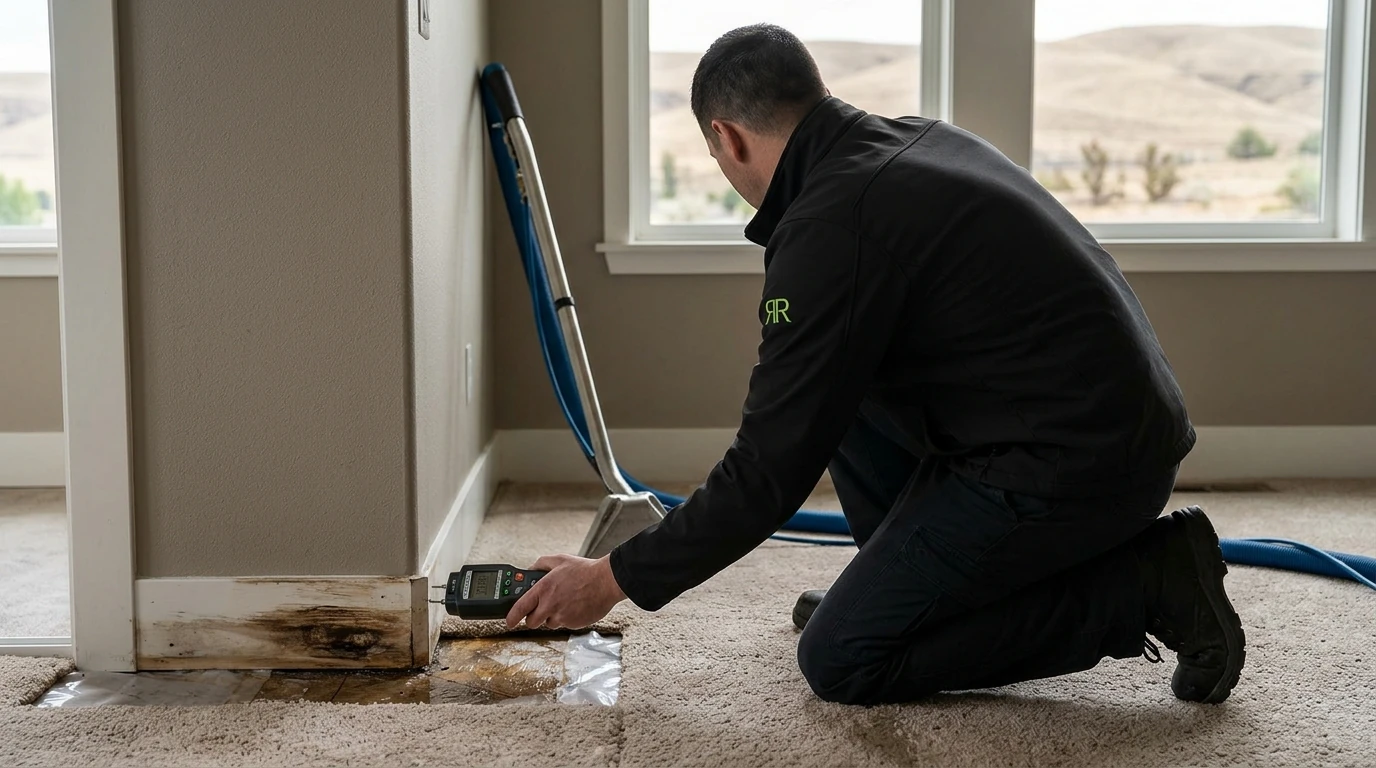
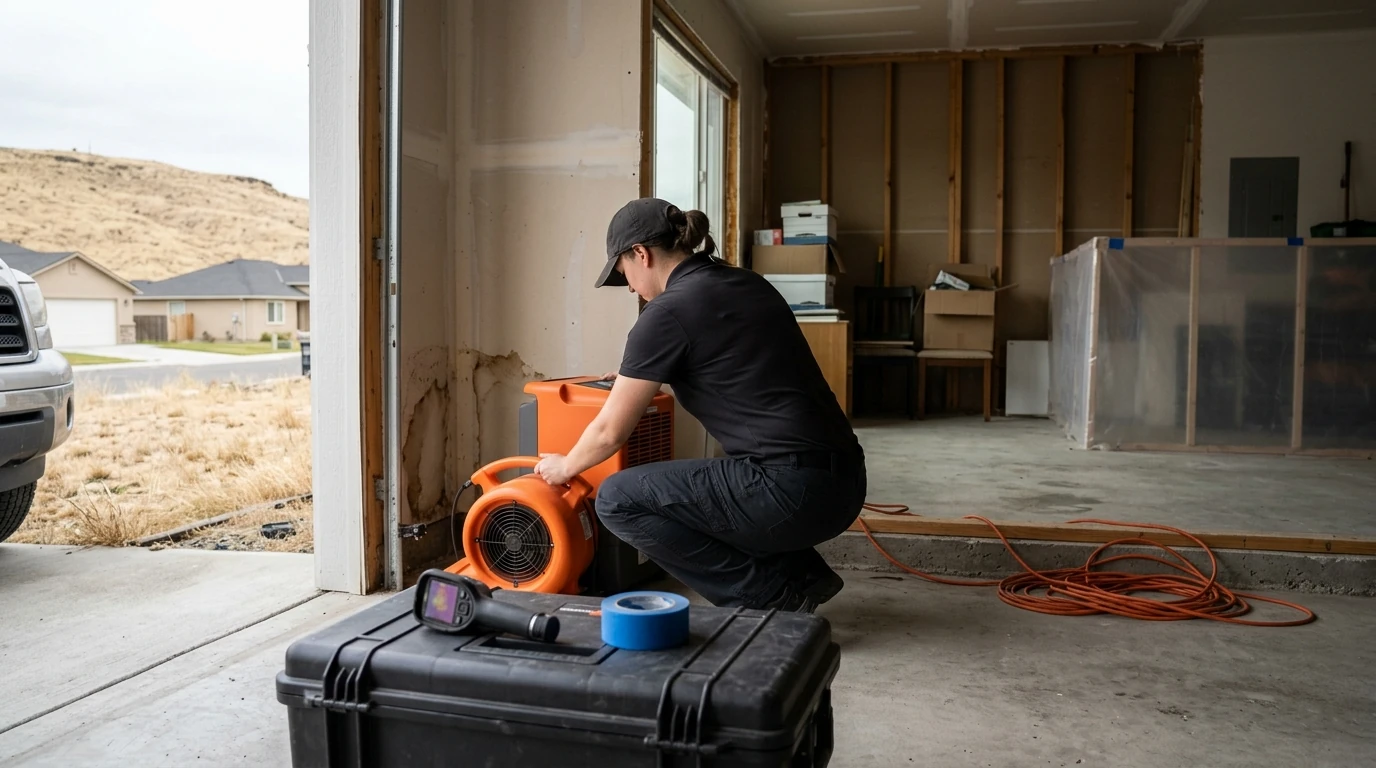
On arrival, a technician maps the moisture with an infrared camera and a penetrating meter to find out how far water traveled behind walls and under flooring, not just what’s visible. Standing water gets extracted with truck-mounted or portable equipment, and air movers plus low-grain-refrigerant dehumidifiers go in to dry the structure to the ANSI/IICRC S500 standard, the industry benchmark for water damage drying. Every step gets photographed and logged, which matters later when you file a claim.
If the loss involves a sewer backup, a sump failure, or any water with visible contamination, expect antimicrobial treatment and, in some cases, removal of porous materials like carpet pad or baseboard rather than drying them in place.
What Should You Have Ready Before the Crew Arrives?
Having a few things ready before the truck pulls up speeds up the whole process and protects your insurance claim. Do what’s safe, then stop.
- Shut off the water source if you can reach the valve safely.
- Take photos or a short video of the damage before anything is moved.
- Move anything you can lift (rugs, boxes, furniture legs) off the wet floor.
- Pull your homeowners policy number and your agent’s contact info.
- Avoid running household fans on wet carpet. It can push contaminated moisture into drier areas of the home.
Most standard homeowners policies cover sudden, accidental water damage like a burst supply line, but they typically exclude gradual leaks and require a separate endorsement for sewer backup or sump pump failure. The Insurance Information Institute has a plain-language breakdown of how disaster claims get settled, and our own guide to the first 24 hours after water damage covers the documentation steps in more detail.
What if You’re Not Sure It’s an Emergency?
A few cups of water from a dishwasher drip is different from a pipe that’s been running behind a wall for days, and it’s fine to call and ask which one you’re dealing with. A quick phone triage costs nothing and can save you from either overreacting to a small spill or underreacting to a hidden leak that’s already into the subfloor near Badger Mountain or Horn Rapids homes with crawlspace foundations.
If you’re ever unsure whether it’s safe to stay in the house, treat it as the emergency and get out first. Water near outlets, a sagging ceiling, or a strong sewage smell are all reasons to leave and call from outside.
If you’re dealing with active water damage in Richland right now, the fastest path forward is a same-day assessment rather than guesswork. Request a water damage assessment or review the full scope of water damage restoration services covered in the Tri-Cities area.
About Restoration Resource
Founded in 2022 and based in Pasco, Restoration Resource is an IICRC Certified Firm licensed in Washington (RESTORL764CE) and carries WRT, ASD, AMRT, and FSRT individual certifications across its crews. It handles water damage restoration, water cleanup, fire and smoke damage restoration, mold remediation, sewage cleanup, and storm damage restoration across Richland, Pasco, Kennewick, and the surrounding Tri-Cities area, with 24/7 phone availability and a 5.0 Google rating from 41 reviews.
Need help now? Call Restoration Resource at +15095281166.