
TL;DR: In Washington, mold remediation typically costs $500 to $1,500 for a small, isolated area like a bathroom corner, and $3,500 to $10,000 or more for a whole room, crawl space, or HVAC system with extensive growth. The biggest cost drivers are square footage, which materials are affected (drywall versus hardwood versus ductwork), and whether containment and clearance testing are required. Most homeowners insurance policies only cover mold cost if it resulted from a sudden, covered water loss, not long-term humidity or neglect.
If you just got a mold inspection report back, or you’re staring at a dark patch behind the washing machine in your Pasco or Kennewick home and wondering what it’s going to cost to make it go away, you’re not alone. Tri-Cities homes run swamp coolers and humidifiers hard through the dry season, and that moisture has to go somewhere. It often ends up condensing in crawl spaces, attics, and behind drywall where nobody’s looking until the smell shows up. Here’s what remediation actually costs in this state, and what changes the number.
How much does mold remediation cost in Washington?
Most Washington homeowners pay between $500 and $10,000 for mold remediation, with small isolated jobs at the low end and whole-room or system-wide jobs at the high end. The number depends almost entirely on how much square footage is affected and what’s behind the surface mold.
A patch of surface mold on bathroom tile or a windowsill, caught early, is a cleaning job more than a remediation job, often under $1,000. Once mold has worked its way into drywall, subfloor, or framing, the job requires containment, material removal, and air scrubbing, which is where the cost climbs. The table below shows typical industry ranges for common scenarios in this region.
| Scenario | Typical Cost Range |
|---|---|
| Isolated surface mold, under 10 sq ft (bathroom, closet) | $500 - $1,500 |
| Single room, moderate growth behind drywall (10-30 sq ft) | $1,500 - $3,500 |
| Crawl space or extensive room-wide growth (30-100 sq ft) | $3,500 - $7,000 |
| Attic or HVAC system contamination | $5,000 - $10,000 |
| Whole-house remediation after a major water loss | $10,000 - $30,000+ |
| Standalone post-remediation clearance testing | $300 - $700 |
These are typical ranges for the industry, not a quote. Every job is different, and Restoration Resource provides a written scope after an in-person inspection before any work begins.
What actually drives the cost of mold remediation?
The price moves with square footage, the materials involved, and how hard the space is to access, not with how bad the smell is. A small area behind an accessible wall costs far less than the same square footage inside a cramped crawl space.
Square footage and depth of growth matter first. Surface mold on paint is cheap to clean. Mold that’s colonized porous material like drywall paper, insulation, or subfloor usually means that material gets cut out and replaced, which adds demolition and reconstruction cost on top of remediation.
The category of water that caused it matters too. Mold from a clean leak (Cat 1 water) is cheaper to handle than mold tied to a sewage backup or long-standing Cat 3 water, which requires stricter disposal and PPE protocols under IICRC S520 guidelines. Accessibility is the other multiplier: attic and crawl space work takes longer per square foot than an open room because of tight clearances and the need for supplied-air respirators in some cases.
Finally, clearance testing after the work, an independent air or surface sample confirming the remediation worked, adds a few hundred dollars but is often worth it for resale documentation or a stubborn insurance claim.
Does homeowners insurance cover mold remediation in Washington?
Most Washington homeowners policies cover mold remediation only when the mold resulted from a sudden, covered peril, like a burst pipe, not from gradual leaks or humidity. Many policies also cap mold-related payouts at a few thousand dollars regardless of cause.
That distinction matters because insurers in Washington routinely deny mold claims tied to “long-term condensation” or “preventable maintenance issues” like a swamp cooler that’s been leaking for months. A documented, sudden event, think a supply line failure behind the fridge, has a much better chance of triggering coverage for both the water damage and the resulting mold, if the mold is caught and reported quickly.
Documentation is what makes or breaks these claims. Photos of the original water event, moisture readings, and a dated inspection report give an adjuster something concrete to work from. If you’re not sure whether a mold problem started from a covered event, our guide on how to test for mold walks through what an inspection actually finds, and our post on signs of hidden mold covers what to look for before you call anyone.
What does the mold remediation process actually involve?
Mold remediation follows a set sequence: inspect and map the moisture source, contain the area, remove affected materials, clean remaining surfaces, dry the space, then verify with clearance testing. Skipping a step is usually why mold comes back.
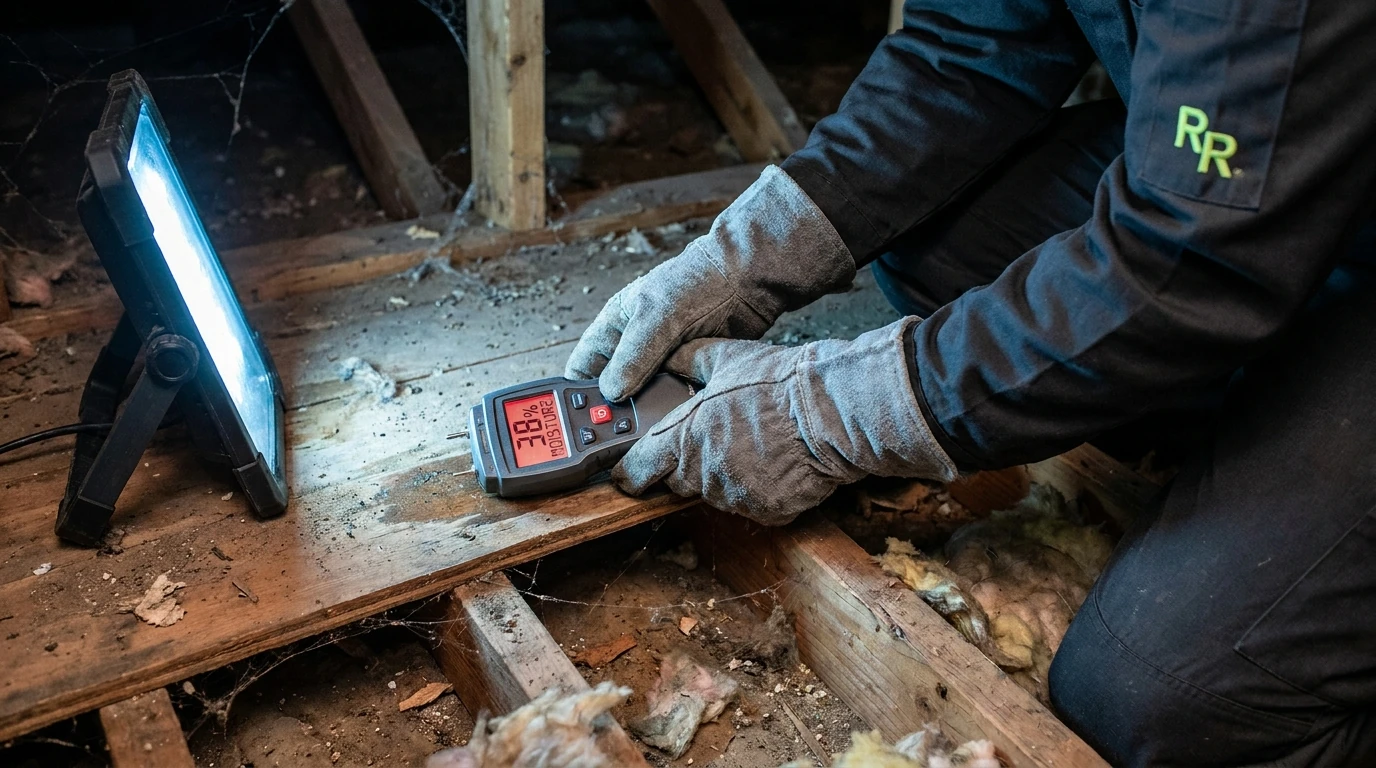
- Inspection and moisture mapping. A technician identifies the moisture source (not just the mold) using a moisture meter and sometimes a borescope to check inside walls.
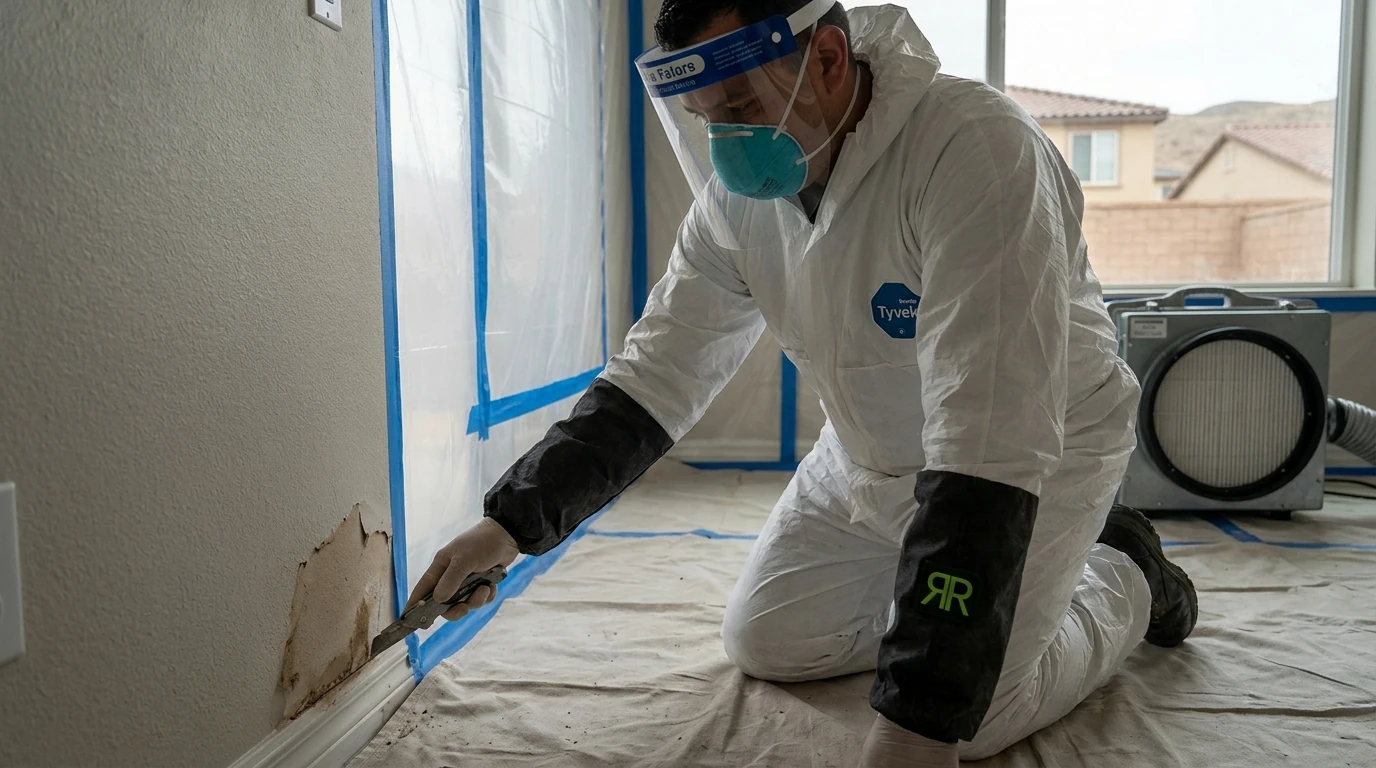
- Containment. Poly sheeting and negative air pressure keep spores from spreading to the rest of the house while work is in progress, following IICRC AMRT protocols.
- Removal. Contaminated porous materials, drywall, insulation, carpet padding, get cut out and bagged for disposal. Non-porous surfaces are cleaned instead of removed.
- HEPA cleaning. Remaining surfaces and the surrounding air get vacuumed and scrubbed with HEPA filtration to pull down airborne spore counts.
- Drying. Dehumidifiers run until the space hits a dry standard, because mold doesn’t come back to a space with no moisture to feed it.
- Clearance testing (optional but recommended). A follow-up air or surface sample confirms spore counts are back to normal background levels.
If the underlying moisture source was a leak or flood, reconstruction (drywall, flooring, trim) happens as its own phase after remediation clears.
What should I do if I think I have mold right now?
If you can see or smell mold, the next step is a professional inspection, not a DIY kit purchase, because a kit tells you mold exists without finding the moisture source causing it. Stop the moisture first, or any remediation will be temporary.
If the mold looks dark, slimy, or covers more than a few square feet, that’s past the point of a bleach-and-sponge fix. For context on when color and texture matter (and when they don’t), see our breakdown of black mold versus regular mold. From there, request a mold inspection so you get an actual moisture map and a written scope before anyone starts cutting into drywall.
Mold remediation pricing varies more than most restoration work because so much depends on what’s hiding behind the wall. A clear inspection with moisture readings is what turns a guess into a number you can actually plan around.
About Restoration Resource
Restoration Resource is an IICRC Certified Firm serving Pasco, WA and the greater Tri-Cities area since 2022, holding Washington contractor license RESTORL764CE. The team carries IICRC credentials in water (WRT), structural drying (ASD), mold (AMRT), and fire and smoke (FSRT) restoration, and operates on a 24/7 basis with a 5.0 Google rating across 38 reviews. Written with the Restoration Resource team.
Need help now? Call Restoration Resource at +15095281166.